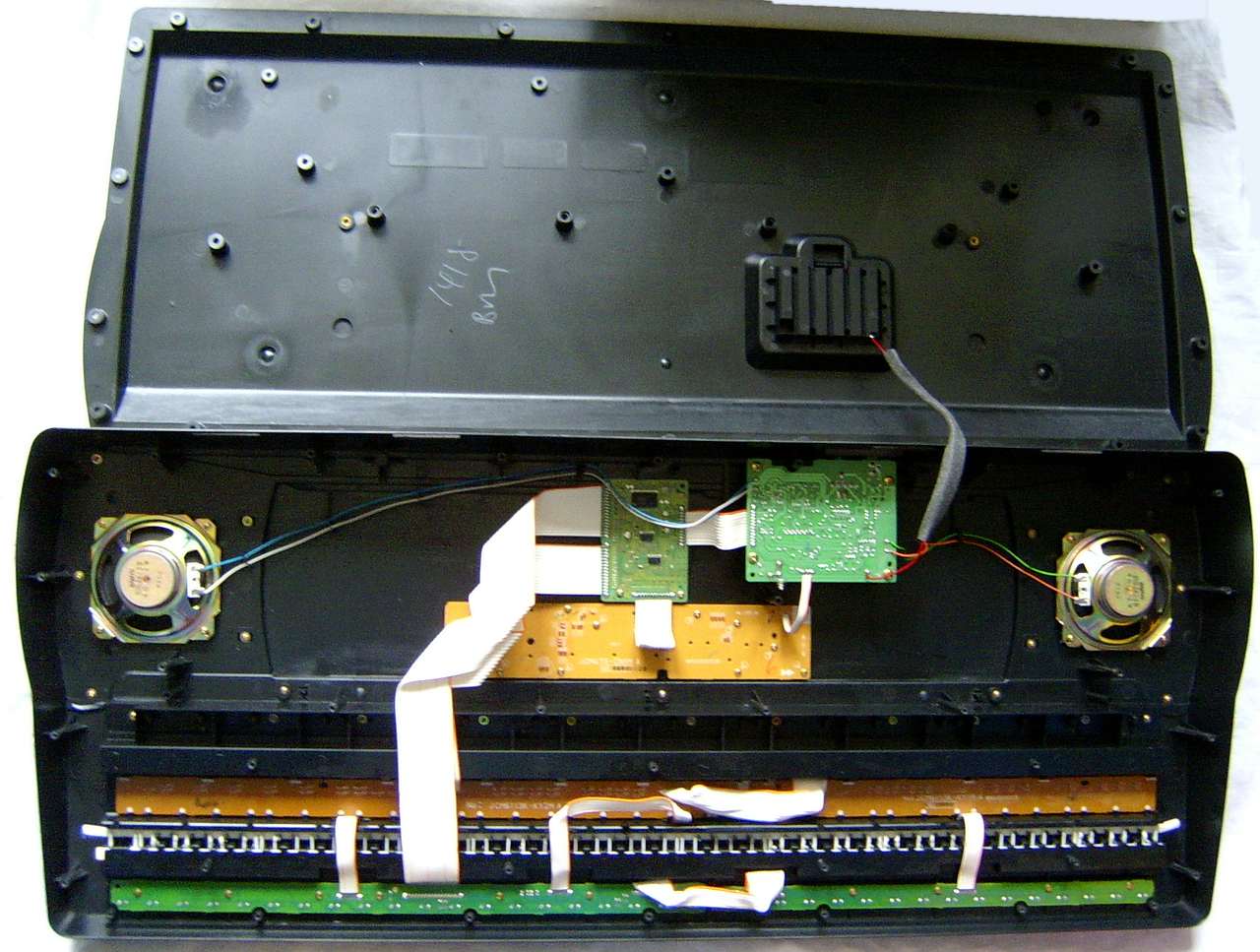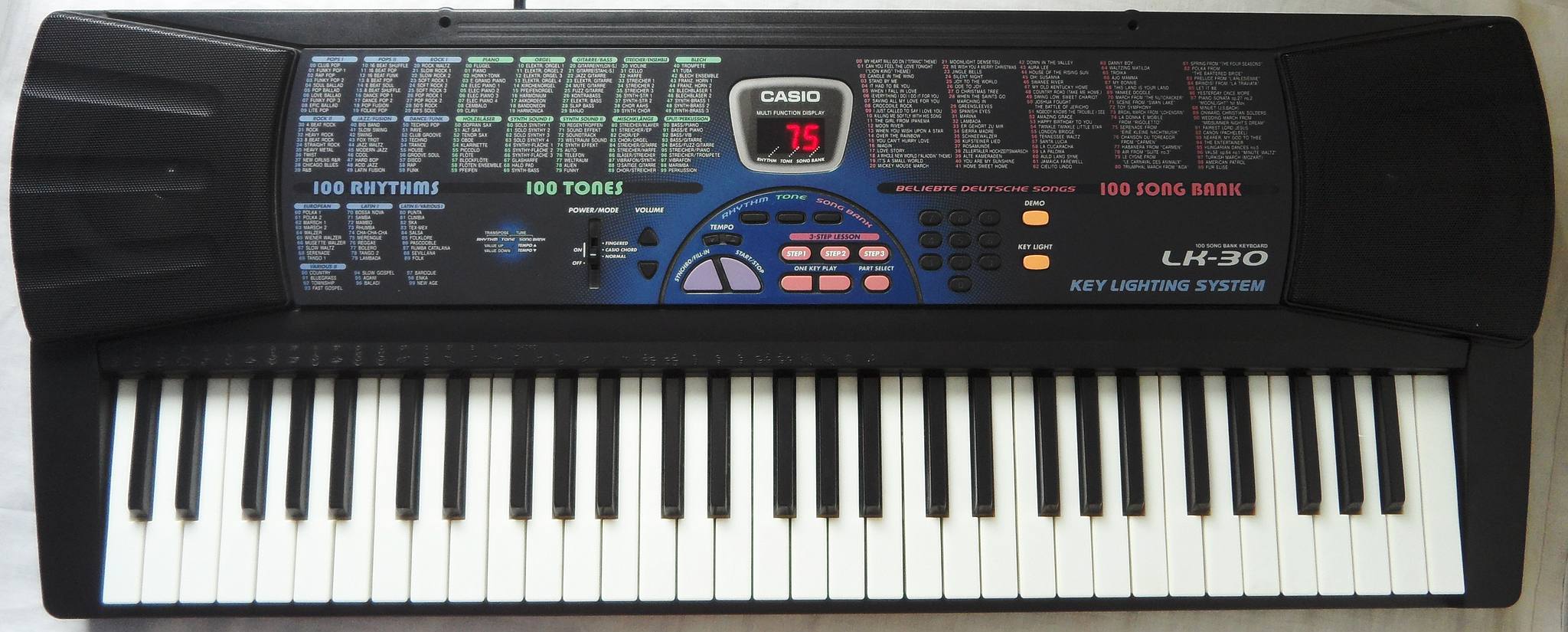
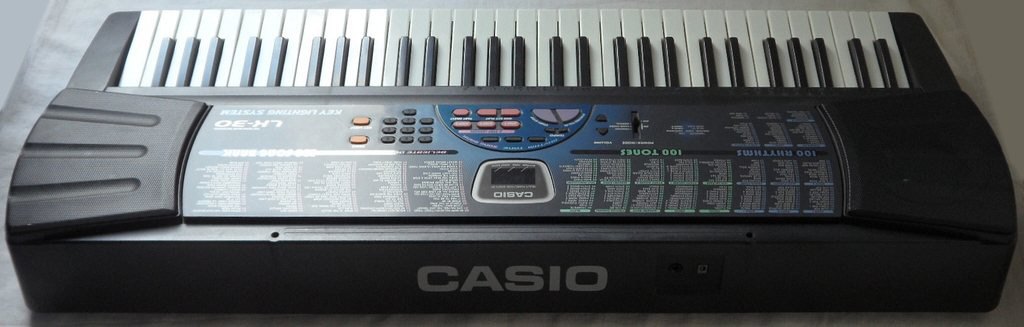
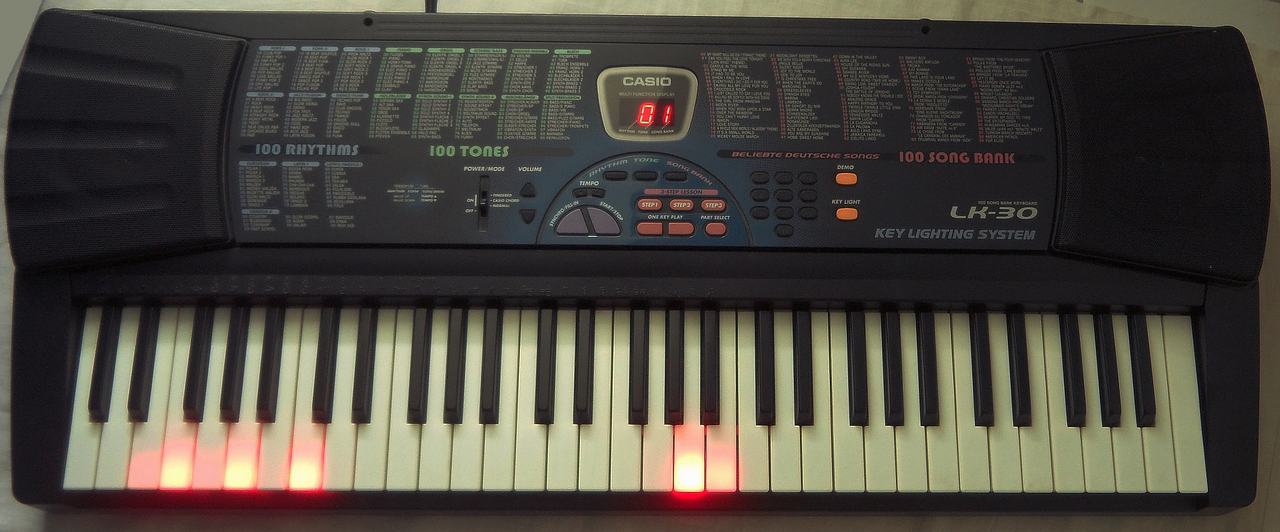
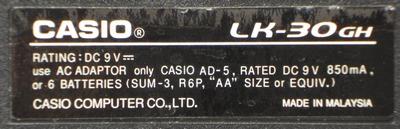
This bulky keyboard made 2000 (case date since 1998) in Malaysia has key lighting with built-in 100 songs for play training and demo.
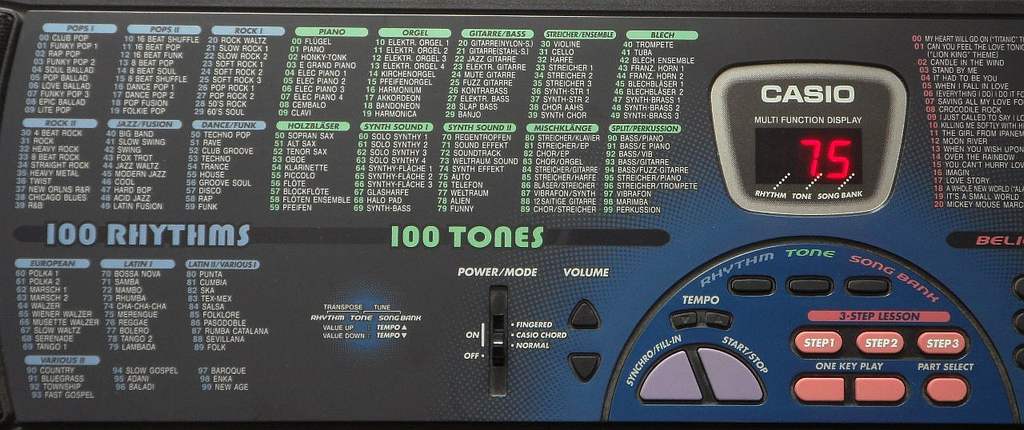
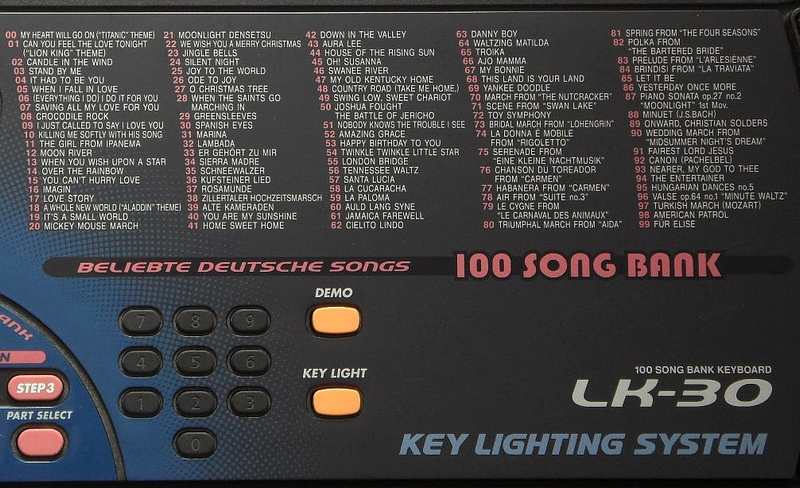
Unusual is that many songs and panel writing is in German, so Casio made local variants of this. It even has also a few synth effect noises in the style of SA-series and some techno styles. Annoying is that the volume of this big plastic monster can not be set lower than medium.
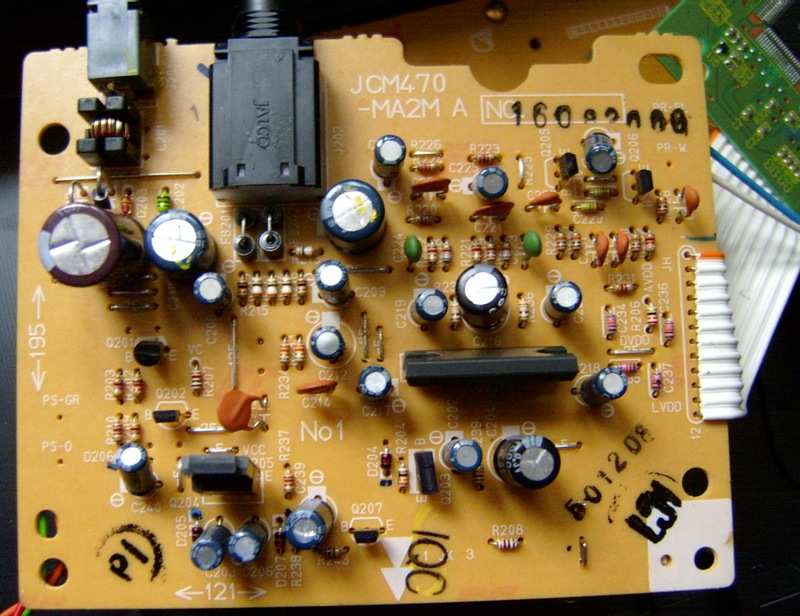
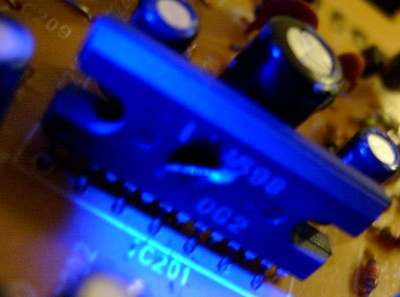
danger: The amplifier chip of LK-30 has a tendency to fail and may go up in smoke.
 |
 |
 |
 |
 |
 |
 |
 |
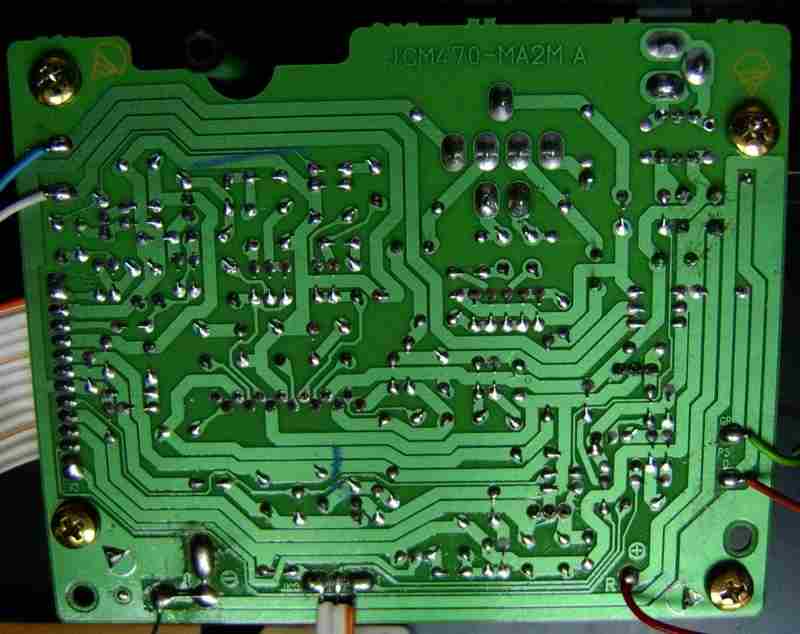
repair of exploded power amp IC.
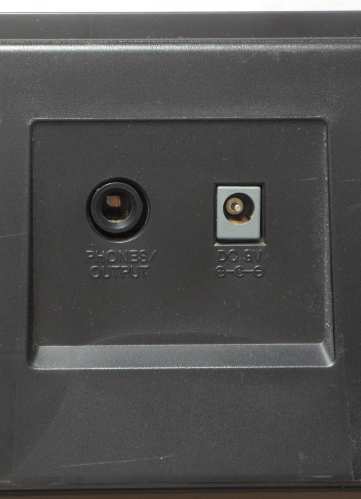
Unfortunately the poor build quality is not only subjective. When I got mine in 2005, the power amplifier IC was exploded with a blast crater in the middle. It is unknown if this was result of a shortcircuit by the electrolytic capacitor plague of its era (see Badcaps website) or because the LK-30 always starts with volume way too high (it has no heatsink), or if the previous owner connected a wrong power supply. After ordering a new IC I got it running. But I read internet comments that the amp of this model often seems to make trouble, causing static noise or feedback out of the speaker. Casio in 2007 had a product recall because their CTK-710 keyboards overheated with fire hazard. It is unknown if the fault was related.
The stereo sound is likely based on a successor of Casio's PCM engine softsynth. Interesting is that the preset sounds also include effect noises those were at least inspired by those of SA-series, including sirens and space laser stuff. The timbres are different, and It is unknown if these are still based program loop synthesis or just imitated by long modulation envelopes. E.g. "Alien" obviously alludes to the "Space Invaders" arcade game, including multiple speeds of its bass line monoto, UFO siren and shot sound. "Auto" (car) has car sounds with car horn, ambulance and ascending motor noises with gear shifting those reminds to Casio SA-40 "car race".
tip: To disable auto-power-off hold "tone" button during power-on.
The accompaniment has single finger and fingered mode, but refuses non-chords. Beside fill-in it does nothing fancy. But there are also a few techno patterns. They have matching synth bass & chord voice that works also in manual chord mode (but not for non-chords).
The teaching mode got renamed "Three Step Lesson System". There is no mentioning of "melody guide" from the age of Casio MT-800 anymore. It has 3 modes ("step" buttons) and a button to turn key light off. Press "song bank" button to exit.
Step 1: Easy PlayThe song list of the songbank likely differs with the regional version of the LK-30. So mine has German songs including Schlager and marches etc., but there is also standard international contents.
This steps through the song in one key play mode, no matter which keys of melody section you press. You can also use "one key play" buttons.Step 2: Slow Play
Press the keys those light up at your own speed. The melody waits until you press the correct key.Step 3: Normal Play
The keys light up no matter if you play correctly. The accompaniment continues at normal speed.
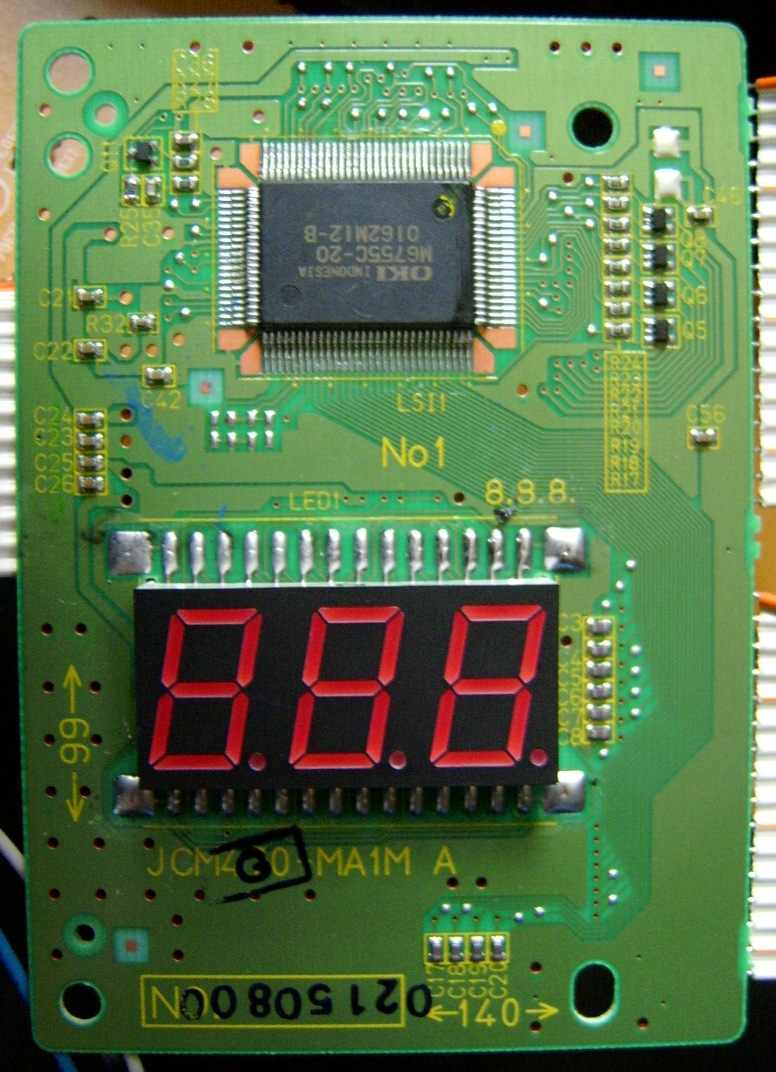
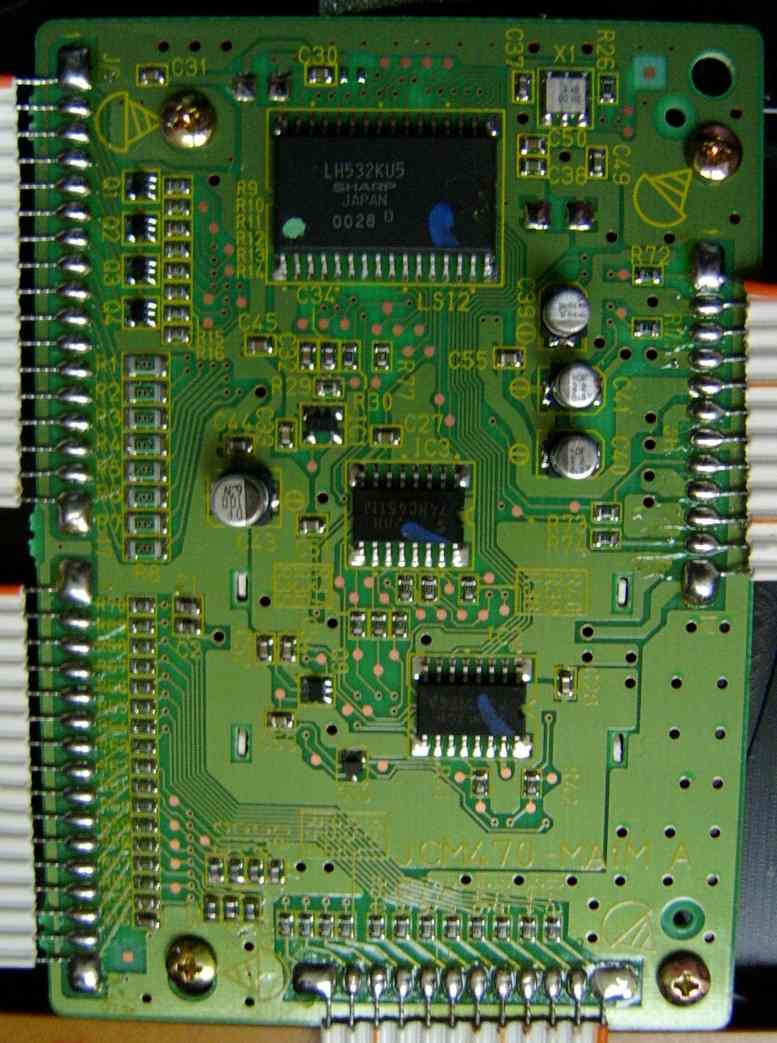
hardware detailsThe German version of Casio LK-30 is built around the CPU "OKI M6755C-20" with external ROM "Sharp LH532KU5" that likely varies with regional variant.
The ROM is likely the documented "Sharp LH532100B" maskrom (32 pin SMD, 256KB) with JEDEC standard eprom pinout (DIP). At least this is no (perishable) flash memory. But dumping SMD stuff would be tough. The digital PCB has additionally a "74HC4511A" (16 pin SMD) and "74H(?)C174A" (16 pin SMD) those likely demux the key LEDs. The only service manual of related hardware I could find is from Casio CTK-411/CTK-431 (with LCD, no keylighting - CTK-431 PDF is higher resolution) and CTK-480. Unusual is that the CTK-411 and CTK-480 keyboard matrix has the keys grouped by 8, while earlier Casios (except VL-1 and early PT-series) had 6er groups (i.e. 2 groups per octave). I haven't examined the LK-30 further, but the led matrix of CTK-480 (similar with no ROM) is wired from CPU pins 88..95 (having each a 220 ohm resistor) through a driver transistor to pins 80..82. The 3-digit LED display is wired among pins 88..95. In CTK-220L the LEDs are wired through driver transistors between CPU pins 88..95 (LX0..LX7) and pins 81..87 (LY1..LY7). pinout M6755The CPU "OKI M6755x-xx" (100 pin SMD, x-xx = software number of internal ROM) is a medium grade home keyboard CPU with internal ROM that was used in many Casio songbank keyboards like LK-30 (M6755C-20) or CTK-480 (M6755B-06) and also in the sampling mini keyboards SK-60. The letter behind "M6755" likely indicates the internal ROM size (count of songs). Not much is known about this chip, beside it contains 12-note polyphonic PCM sound generation with internal stereo DAC and external ROM. Likely it runs a versatile softsynth like in earlier Casio PCM keyboards (see SA-series).In some keyboards (e.g. Casio CTK-220L with CPU "OKI M6755B-13" seen in service manual) it is operated single-chip, while in others it uses external ROM (likely for 100 songs) and in SK-60 it uses an external 8bit RAM for 32KB sample memory. Key leds can be wired in different ways. The clock rate 20.0MHz indicates that this CPU was a new development and no direct relative of the classic SA-series or MT-540 anymore. (Again the address line order is really a mess. Don't ask me why - to ease PCB layout?) E.g. in CTK-220L the data bus lines are used for an LED display and key matrix line names are different, which hints that the internal hardware port names are the "P##", while "KO##" depend on the software number. This pinout is based on the service manual of Casio CTK-411/CTK-431 (software number C-17, which has LCD and no keylighting), CTK-220L, CTK-480 (no external ROM), CTK-485, CTK-501 and SK-60. Some pin meanings differ. The LK-30 (software number C-20) has keylighting and LED display like CTK-480 and external ROM like CTK-411, so pinout may be a mix of both. caution: The KO# numbering of pins 66..77 seems to vary by 1.
So in most schematics pin 66 is "KO0/P50" but in SK-60 it is "KO1/P50"
(likely a bug - to add confusion, its actual matrix layout pins still starts
with KO0).
The order of address and data pins to the ROM is shuffled, likely to scramble the contents or avoid wire bridges, but the pin order of different models (seen in schematics) seem to stay the same. ROM pin 31in schematics is marked NC but wired to CPU pin 97 which makes no sense. Likely it is A18. I don't know if LK-30 is wired the same. It likely muxes key matrix outs with key leds. Very strange are the pins MOD0..2 (service manual name "mode selection terminal"), those may be test pins suitable to dump the internal ROM or replace it with external memory in hacks and prototypes. In all keyboard schematics I saw MOD0 is wired hi and MOD1, MOD2 wired lo. Most interesting is that this CPU type supports midi, but it is unknown if LK-30 has firmware for it. For missing external interface parts see e.g. CTK-431 service manual. On the Hackaday site someone upgraded a CTK-480 with midi-out. |
A songbank keyboard with similar hardware (same CPU) and midi was the
CTK-411
(no keylighting, LCD, only 49 keys | aka CTK-431).
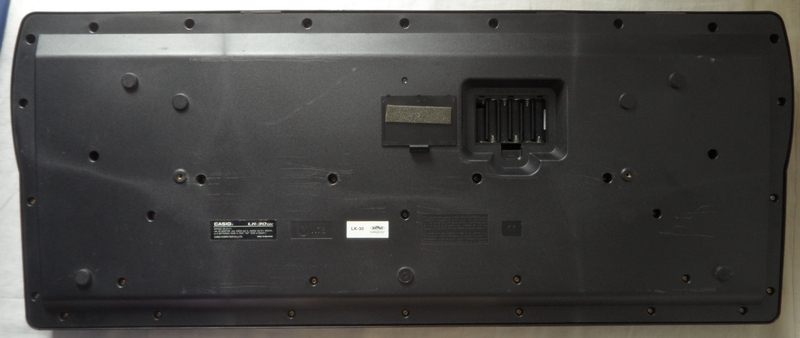
| removal of these screws voids warranty... | ||
 |
 |
|
|
|