|
|
This obscure Chinese midsize keyboard may be a far relative of the wonderful Ramasio 892, like this it is full polyphonic with monophonic piano envelope - a technology that established brand companies abandoned already in the beginning of 1980th and that they never used in midsize keyboards.
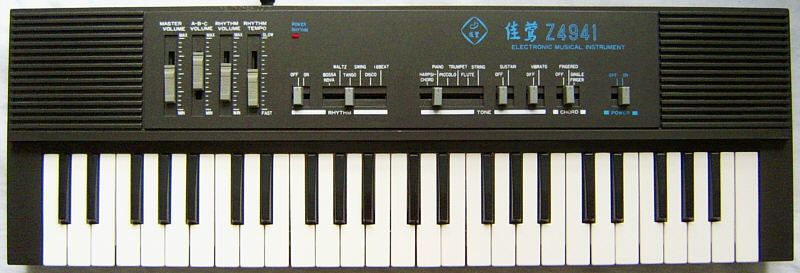
Like Ramasio 892 it has nicely warm squarewave- based analogue timbres and also the 6 rhythms have a lovely trashy analogue home organ appeal. E.g. the white noise "open hihat" hisses always 1 step long, no matter how slow the tempo is set, which makes it rather sound like the hiss of a pneumatic air valve. Interesting is the nicely warm full polyphonic fingered chord accompaniment, which responds so rapidly that it even accepts trilled notes and not only plays non- chords but even weird grunting cluster patterns. But unlike 892 the accompaniment patterns are rather simple and more like Antonelli Star 2379.
(Note: This keyboard sounds great, but don't buy one of these
so far your only intention is to get a keyboard with faithfully imitated
natural instrument sounds. Remember, this is a squarewave keyboard those
timbres sound not remotely like what is written on its switches, though
bought with wrong expectation it may disappoint you. Also the monophonic
envelope behaves very different from normal polyphonic keyboards.)
 |
 |
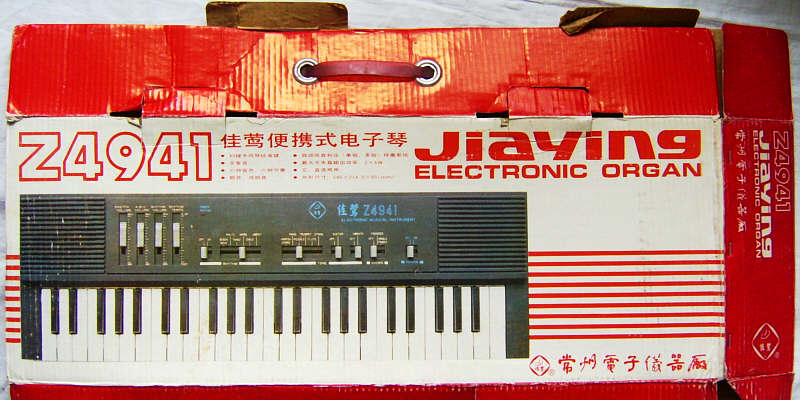
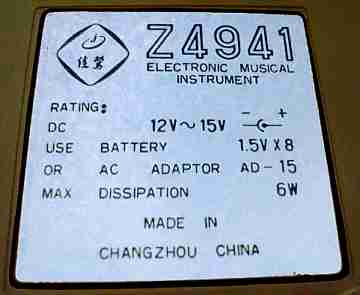
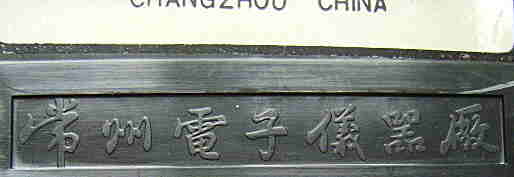
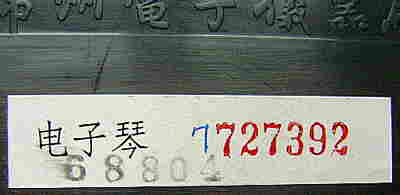
This keyboard seems to be ultra-rare; I never saw any other specimen, nor any other instruments made by "Jiaying". However I guess that they later renamed this company into Jiayin, which was one of the distributors of the absurdly bad Yongmei transistor tooters (see Golden Camel-7A).
 |
 |
 |
 |
 |
 |
    |

 |
The main voice is made from squarewave with monophonic volume envelope and sounds pleasantly warm and bassy. The timbres "piccolo", "trumpet", "flute" (slow attack phase like a pipe organ). "piccolo" is muffled plain squarewave (like a clarinet). "trumpet" has a narrower pulse width but sounds more like a slightly thin and dull reed organ than brassy. "flute" is a fatter variant of it. "string" has a slower attack and also reminds to a reed organ. The "piano" is made from the "flute" timbre with percussive monophonic decay envelope. It sounds more realistic than on Ramasio 892, but due to the envelope is monophonic, the tones of all currently held keys sound again at full volume as soon a new key is pressed. "harpsichord" is the same in brighter, using the "string" timbre. The vibrato switch adds a 6Hz vibrato (also affects chord voice) and the sustain switch adds a percussive but very long decaying (about 10s?) monophonic sustain. After power on the first main voice note often begins with a loud popping noise (likely by an empty capacitor). Moving the preset sound slide switch with held notes mutes the main voice during intermediate positions and sounds a popping noise when a new preset sound is reached.
The analogue percussion is of typical old home organ style. Base and tom knock quite dull. The hihats are made from transistor noise. Unusual is that the "open hihat" hisses always 1 step long, no matter how slow the tempo is set, which in slow rhythms makes it rather sound like the hiss of a pneumatic air valve. The tempo can be steplessly adjusted between very slow and quite fast; however the "swing" rhythm is slower than others and thus can be only cranked up to medium tempo.
The chord voice of manual chord and accompaniment is made from plain squarewave with a small dose of sustain. The full polyphonic accompaniment is of the same ancient type like with Antonelli Star 2379. It chops the chord voice simply into a staccato and there is an additional warm and dull analogue e-bass voice that toggles between the note of the lowest and highest held chord section key. The accompaniment responds fast enough to trill chord notes, but unfortunately chord memory can not be turned off, thus chord notes stay always held after key release, which prevents clever play tricks. With rhythm off there is a manual chord mode.
Question: Does anybody know other
keyboards made by Jiaying (not Jiayin)?
| removal of these screws voids warranty... | ||
 |
 |
|
|
|