|
|
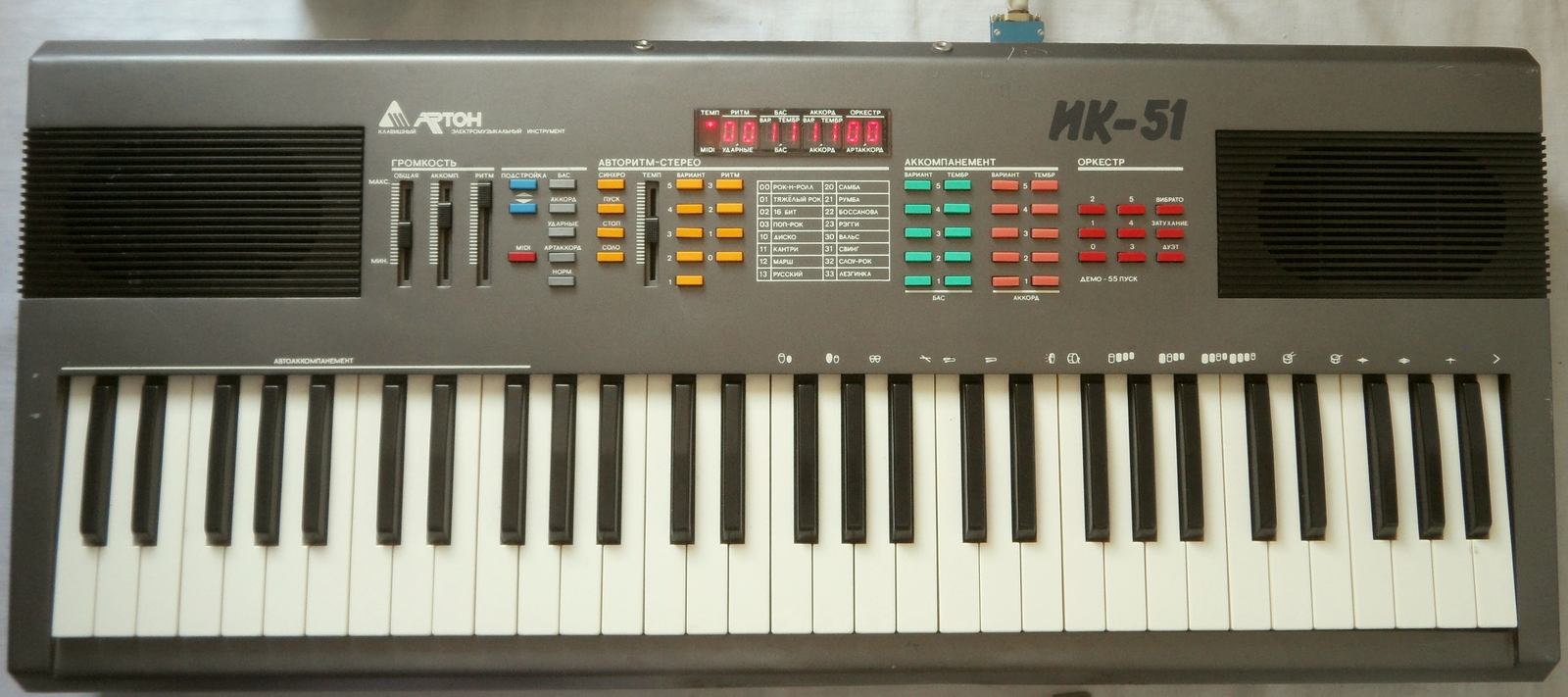
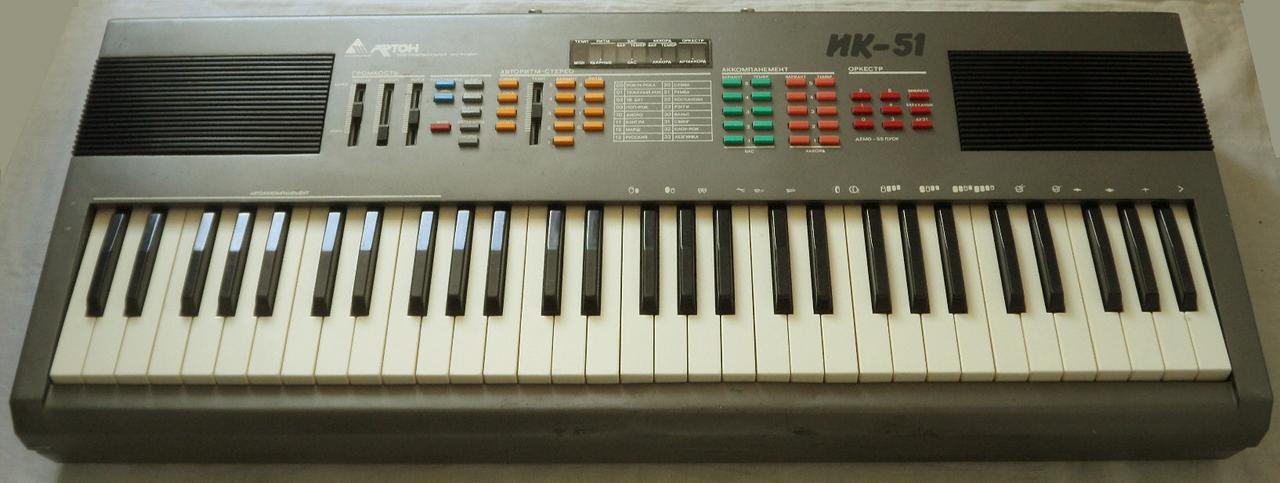
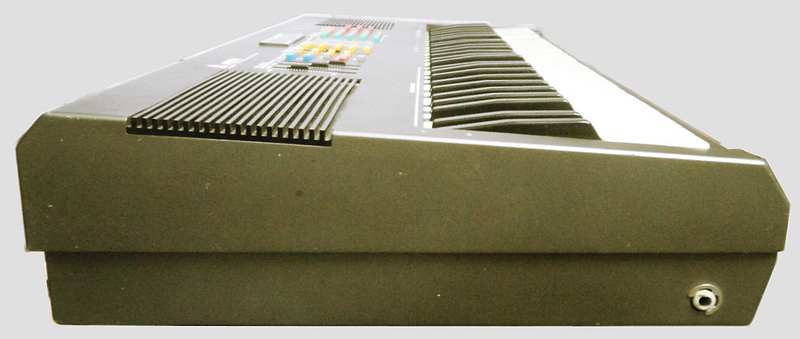
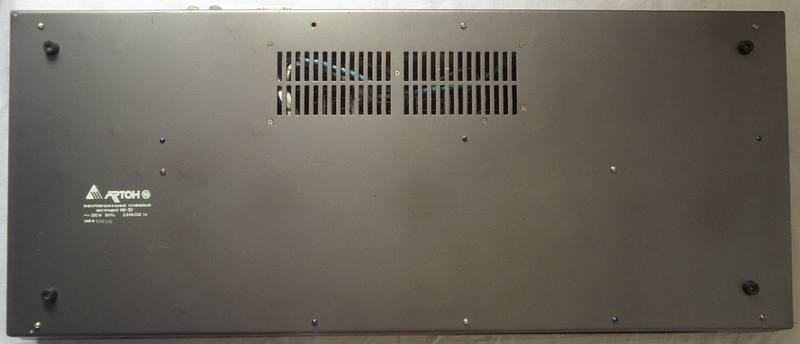
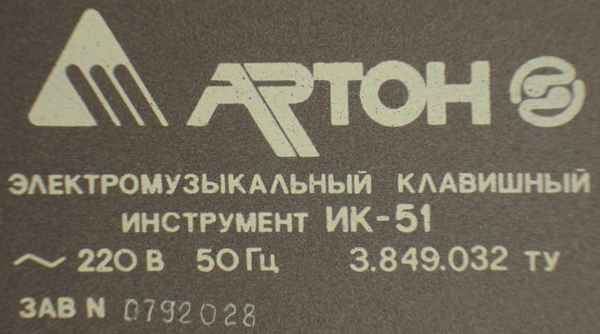
The Arton IK-51 was the only midi keyboard ever made in USSR, built by the creators of Polivoks.
 |
 |
 The
pathetic attempt of making their own digital keyboard in the manner of
Yamaha
PSR-31 ended in this enormous metal hulk as heavy as an e-bike, containing
as much electronics as 3 fullsize desktop PCs. Most remarkable is the absurdly
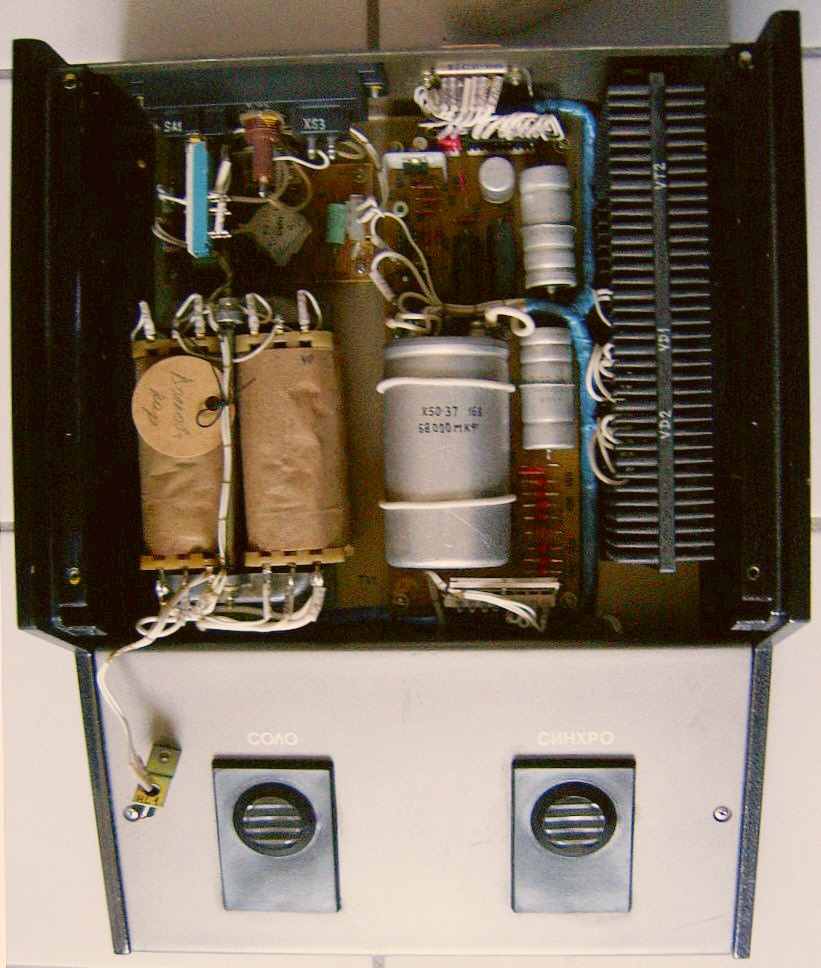
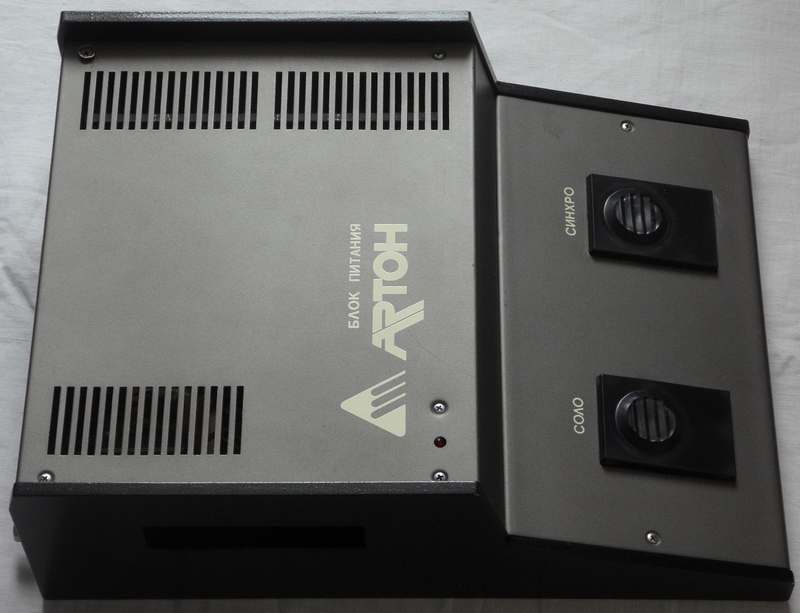
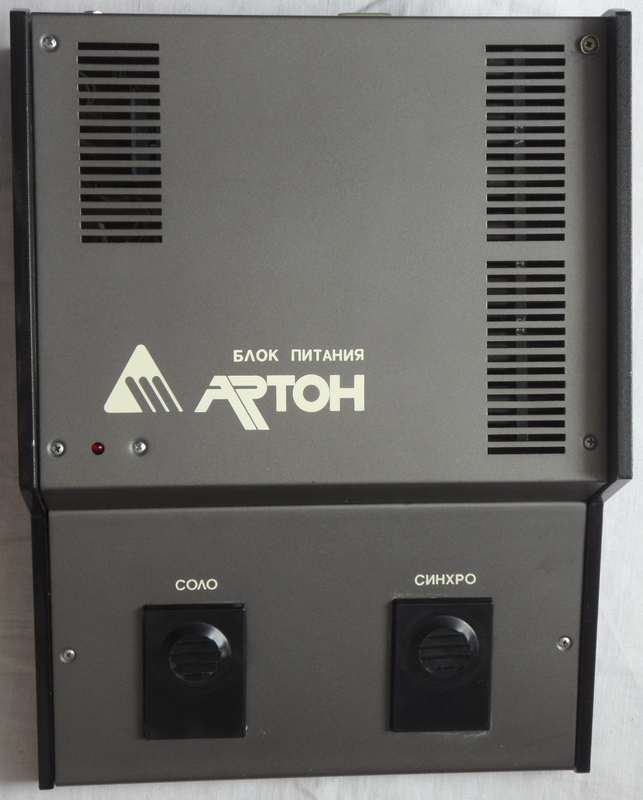
huge, console shaped external power supply, that has 2 rubber pedal buttons
for stop and synchro start, and emits a creepy "gnnnnnn" after pushing
the red button (on its back to turn it on). It is unknown if they were
in use for recordings in national music studios or if bands played them
on stage. It is a very expensive construction, despite the concept is like
a normal digital home keyboard with built-in stereo speakers, automatic
accompaniment and number-selectable preset sounds & rhythms.
The
pathetic attempt of making their own digital keyboard in the manner of
Yamaha
PSR-31 ended in this enormous metal hulk as heavy as an e-bike, containing
as much electronics as 3 fullsize desktop PCs. Most remarkable is the absurdly
huge, console shaped external power supply, that has 2 rubber pedal buttons
for stop and synchro start, and emits a creepy "gnnnnnn" after pushing
the red button (on its back to turn it on). It is unknown if they were
in use for recordings in national music studios or if bands played them
on stage. It is a very expensive construction, despite the concept is like
a normal digital home keyboard with built-in stereo speakers, automatic
accompaniment and number-selectable preset sounds & rhythms.
Its creator Vladimir Kuzmin told in Youtube comments that in USSR due to import restrictions a real Yamaha PSR-31 was near unobtanium and cost as much as a car, so the costly IK-51 was for 970 rubles still less unaffordable, and originally planned with plastic case and internal power supply to become an actual home keyboard. Designed for the domestic market, some rhythms and styles of this technical marvel were dedicated to Russian folk music. But apparently the instrument often failed after a year, so they had to send out a service technician to swap PCBs.
My specimen is broken and full of glitches. Instead of accompaniment it plays cacophonic note mess, the rhythm patters are garbled and also the LED display shows segment garbage (likely by bitrot). After playing one or few notes the entire user interface locks up and can be only reset by powercycling. However the demo song "Badinerie" is still halfway recognizable although notes are off and resemble telephone dial tones. The percussion is sample based. The main and accompaniment channels sound like FM, but some timbres distort very badly.
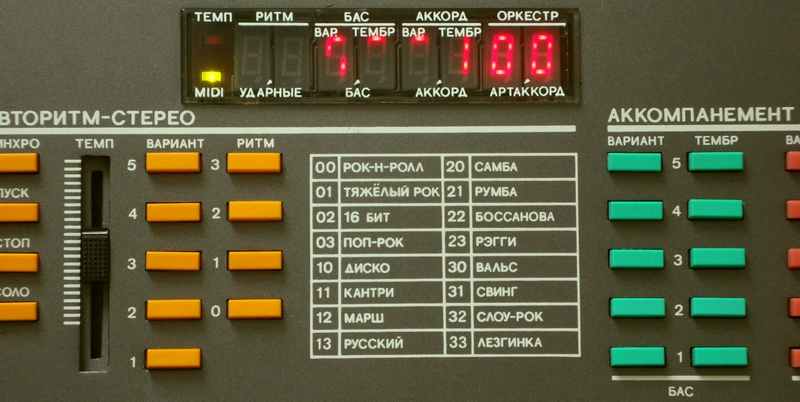
The control panel writing is cyrillic but most words correspond to English. Each main function has its own group of each 6 cipher buttons (rhythm only 4) for typing 2-digit numbers, those are shown on an 8-digit 7-segment LED display. My description may be as faulty as the instrument because it keeps crashing and my accompaniment plays only disharmonic note mess.
  |
 |
 |
 |
 |
 |
 |
 |
 |
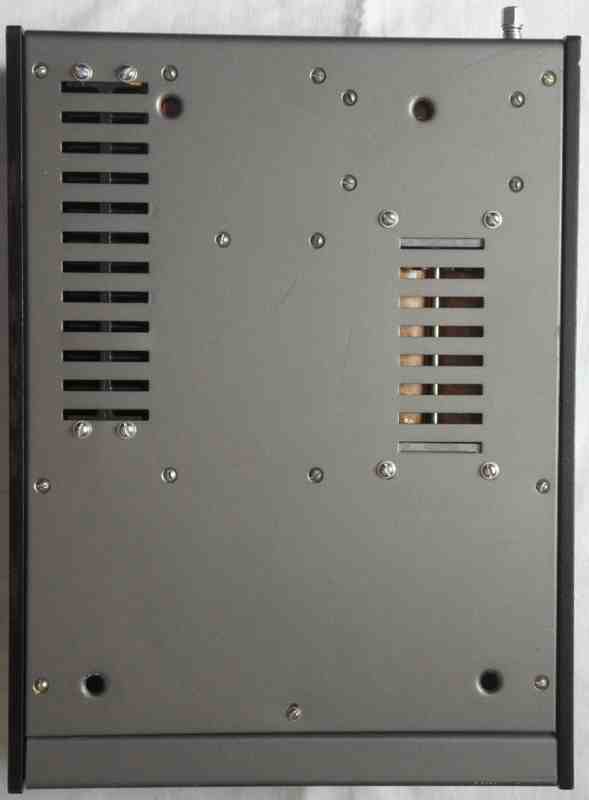 |
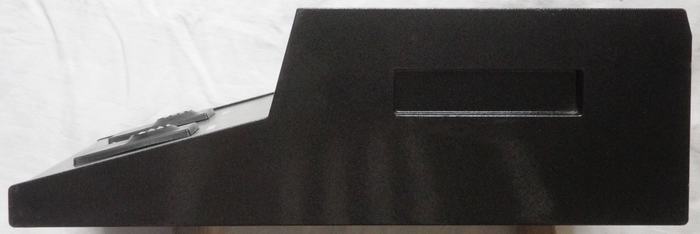
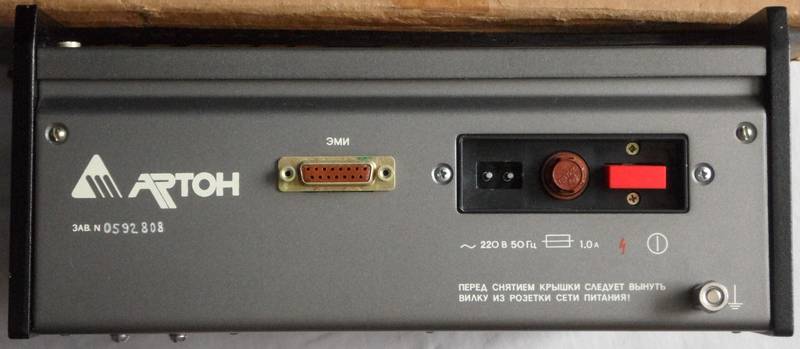 |
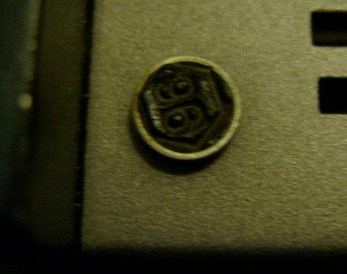
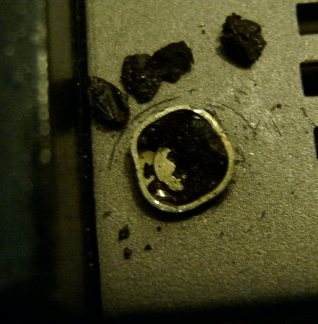
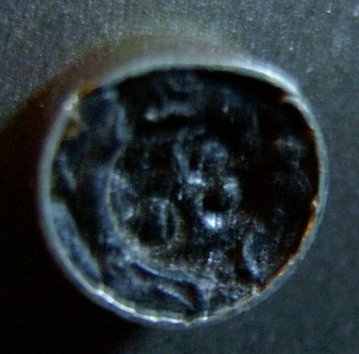
warranty wax seal (now broken) |
 |
 The
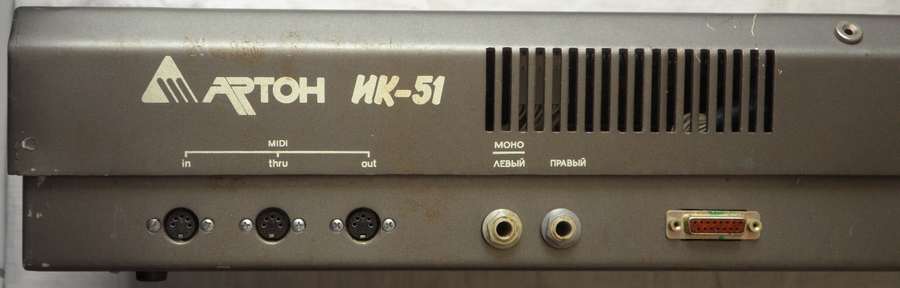
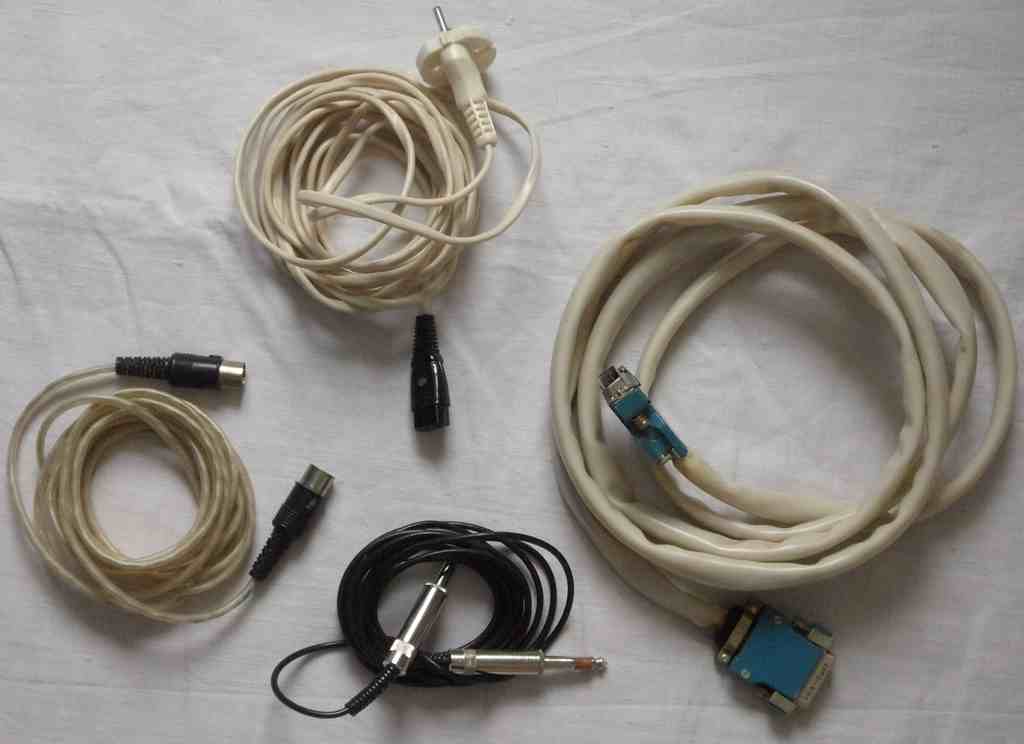
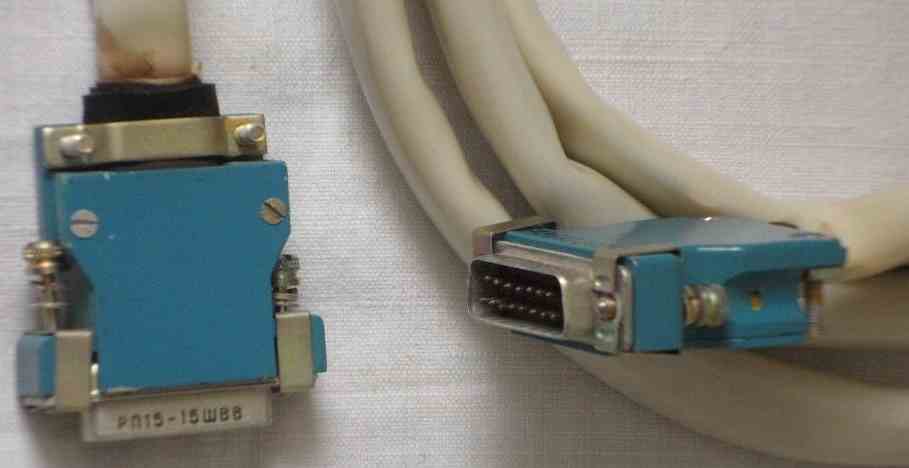
power supply plug screws are too short to secure it. The
power supply plug screws are too short to secure it. |
Unfortunately my Arton IK-51 is faulty and makes a lot of nonsense. When I power it one, the piano keys work only for a few seconds and then fail in semi-random order; trilling a small group of keys keeps this group working until I press other keys. Usually after few additional seconds the entire control panel locks up and does nothing anymore until I power it off and on again. One note (or key contact?) seems to be stuck. Only the tempo slider always keeps working and also the tempo/ synchro LED keeps flashing when it was flashing before. However when I press certain button combinations it will not lock up. E.g. when I type "55" on orchestra buttons, the LED display shows segment mess and most buttons keep working. I can now start the classical demo tune (press right foot switch and a chord section key?), which plays recognizable, but with minor disturbing tones in it. When I press piano keys, the melody gets messed up more, and when I select any accompaniment, everything turns completely into mess. Also the vibrato button sometimes turns the main voice rather into a rastered digital siren effect. Most keyboard note pitches are wrong or have different timbres.
Long ago when I activated the midi button during demo (which turns off the sound generation by piano keys, green LED lit), the demo song plays almost perfectly without disturbing tones, and also the control panel worked better. But strange is that the demo tune played percussion samples related to its notes (i.e. each pitch corresponds to a different drum) and when I selected different preset sounds (which works), the set of note related percussion instruments changed also. (Playing keyboard notes does not trigger drums.) The demo tune can run for a long time without crashing, and also selecting different preset sounds etc. will not lock it up, however when I press "midi" again (unlights green LED) and play keyboard notes, the user interface (keys and buttons) will finally locked up again. Even in locked up state, the demo or rhythm or note mess that the instrument is playing will not stop. It only refuses to respond on any key or button press, but the sound generation keeps running.
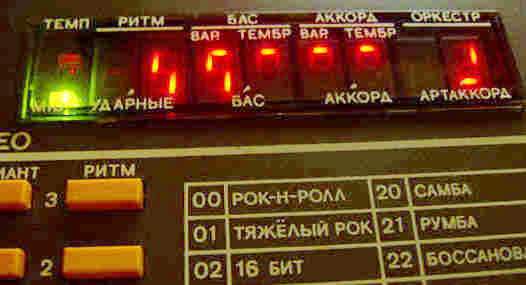
Thus I conclude that the address space is somehow screwed up badly, which makes the notes of the demo song trigger percussion, and played keyboard notes somehow throw a wrench into the user interface program. When powered on, the display shows "00111100" (often sounding a decaying high note), which seems to be one of the conditions those make the control panel lock up when pressing keys, because after pressing "stop"(?) during demo, the display shows the same and also here it locks up after few seconds. Possibly only the leading 2 digits "00" have to do with the crash, but the behaviour seems to vary. When the display shows segment garbage (e.g. during demo), it usually won't crash immediately. Even when there is garbage, selecting functions with the corresponding buttons (rhythm, bass, chord, orchestra) still turns the corresponding display digits into the entered cipher without changing the contents (ciphers or garbage) of other digits.
Even on Russian websearch Yandex.ru the IK-51 is only briefly mentioned in forums and few (usually defective) specimen are even for sale. But text gets only quoted from RusKeys. I found no musicians discussing it deeper nor any hardware or repair tips, and nobody uploaded schematics. The knowledge seems mostly lost.
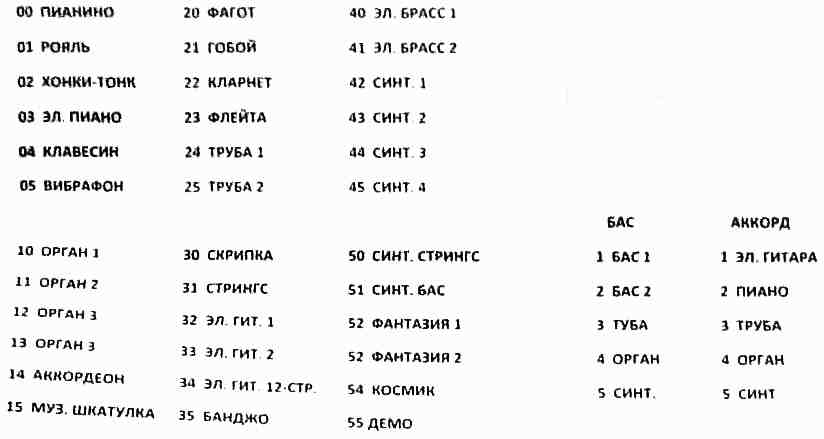
So I do my best to describe the functions from the few hints I found online. Reconstructing the preset sound names was difficult, because there is no writing on the control panel. Likely it wasn't finished when the prototype case was made. I managed to get a cyrillic sound list screenshot from a paper in the Youtube video, that took much editing to get accepted by OCR. But it autotranslates badly and needed much conclusion to obtain plausible instrument names. Apparently the 3rd grey button is supposed to enter keyboard drumkit mode. It has percussion icons above the rightmost keys, and a ">" symbol that in Yamaha keyboards would enter a pause into their "custom drummer" percussion sequencer. I don't know if this feature got implemented in the IK-51 prototype; mine is too broken to test it.
Like the national words for space traveller (cosmonaut, astronaut, taikonaut, gagannaut and so on), each early instrument manufacturer proudly named his single finger chord differently (casiochord, hohnerchord etc.). So here this cyrillic one seems to be originally "artakkord" (from "akkord" = chord in Russian and the Arton brand name). May be in English "artachord" (or "artochord"?) would fit. The Arton IK-51 came out upon a time when musicians in Russia started to barter their trusty analogue synthesizers for western digital plastic tablehooters with accompaniment and demo song, those were considered progress and the new hot stuff - and nowadays are rather rated kiddie keyboards only good for learning.
On the RusKeys website is a history page about this instrument.
It was created by the engineer Vladimir Kuzmin and designer Olympiada Kuzmina,
produced by Urals Vector Company. The chief designer V. Kuzmin explains
in Russian (autotranslation is hard to understand), that they had to develop
dedicated hardware to generate sound because software would be too slow.
For percussion sample playback they used their own equivalent of Texas
Instrument TMS320 with different package, which could reach only 15 instead
of 20 MHz despite running on 7.5V instead of 5V. They found a method to
use waveform samples of only 256 bytes to save ROM space (that was used
only in some of the IK-51?). But for wind instruments they had to use FM
synthesis to do spectrum changes. They also had future plans to make custom
LSI to reduce the weight of the instrument.
| In 2016 I had an e-mail discussion with a guy named Traktor, who contacted
Vladimir Kuzmin.
Kuzmin wrote that the Arton IK-51 wasn't intended to become such heavy. The case should be originally made of plastic, but the tools for making the factory molds were defective, so they had to quickly design the aluminium one. He has no schematics or ROM dumps anymore, those remained in the factory. He gave the tip that a typical fault is that consumer grade connectors tend to oxidize, so when the instrument goes nuts, everything needs to be replugged. (But that's common knowledge with such old electronics.) "Inside there was... 580-series, high-speed 1816 microcomputer, even American TMS32010, "a pair of every creature" (it was necessary to fight for performance)." They planned to later design higher integrated custom ICs made in Vilnius.
Niet. Not an analogue keyboard - a keyboard analog. Huh??? The following is a very reworked translation of Vladimir Kuzmin's lecture about the Arton IK-51 from his youtube video, which is the only good info source I could find. The Russian original text e.g. used several meanings of "analog" (which also stands for Soviet lingo "equivalent product" etc.) that in context of digital synthesizers got completely lost in translation, resulting in incomprehensible Googlenese gibber. And he used a jargon proverb for mental overload that no autotranslator understands. Traktor helped to figure out such subtle language details. He did not explain the 2nd part with function description, so it is a bit messier. I don't speak Russian, hence I had to guess correct words by ear and context where the translation was gibber. Arton IK-51 the 1st soviet synthesizer w/autoaccompaniment
"Hello everyone, here I am, Vladimir Kuzmin. Today I want to tell you about our most powerful, the biggest development - the synthesizer Arton IK-51. A few words about the history of this development - the development was in 1991. We received a lot of requests from musicians to develop and produce something for the family, or amateur - like an equivalent to synthesizers of Yamaha - Yamaha PSR. You know that it is an instrument with auto-accompaniment, with autorhythm - there is an automatic accompaniment, percussion, bass and rhythmic accompaniment. Here's an instrument we came to do. But as necessarily needed a foreign exemplar, according to the laws of the USSR, so that we could refer to it. Here is an equivalent - we made one even better... We made a request to the Ministry of Commerce for the acquisition of such a musical instrument. It was purchased for us with hard foreign currency, by the Ministry of Commerce of the USSR, the synthesizer Yamaha PSR-31. We got it at the factory, opened to see what's inside and - mental emergency shutdown! - Puzzled, we knew as much as before, because there was only one small PCB and two Large Scale Integration ICs. This was a very large micro-miniaturization. info: The Yamaha PSR-31 is based on the FM sound IC YM3812 (OPL2) and the sample percussion sound IC YM3301 (RYP6), controlled by the CPU HD63B03YP. Sound is output through the DAC YM3014. (Seen on service manual photos.) Instead of a display it has some additional slide switches to select modes and accompaniment. We then started thinking. To make something similar, we would have to make a much heavier synth, so we had to do: even though it is heavier, but with much more functions. Well, we decided to ... thought and thought how to do it, and have come up with that. The result was a very original design. It was a powerful development; we killed so few birds with one stone. Firstly, we were prepared for release and produced for the first time in the USSR an instrument equivalent to Yamaha-PSR - with auto-rhythm, auto-accompaniment - i.e. for home use, for the family, as well as for amateur performances. But in addition, with this we planned to develop and produce the first fully digital electronic music instrument in the Soviet Union. What is an all-digital? Before, there were electric organs or semi-digital. I.e. only a specifying part is digital, as in "Maestro" or "VS-34" with analogue timbre block that switched sounds the analogue way. We decided to make a fully digital one, and even with MIDI. What is an all-digital? This means that the consumer (musician) just pressed buttons, and everything was done in a digital way. And the output of this large scheme were DACs that are converting from digital to analog. Thus, here is the synthesizer we built. In addition, we wanted to test several forms of digital sound synthesis, since we hadn't done this yet. By that time, we were already known to some kind of digital synthesis, such as the sample-based synthesis and wavetable. So we wanted to try out and learn to master these techniques, to implement this instrument, or follow some. Thus in this synthesizer implemented at once three methods of synthesis. While quite popular, we did not know anything about them. Here, first there is a synthesis method called wavetable. That means, that the memory stores one period of the wave of any instrument - sound recording of an instrument like flute or piano. And then out of this half-wave it obtained a long sound of any length. That's what wavetable exactly does. Then, there is sample-based synthesis. That is the recording and playback of relatively long pieces of a whole signal. This is made for percussion instruments - percussion sounds. This is sample-based synthesis. And besides, at that time Yamaha was proud on its digital synthesis [or frequency modulation synthesis] - we decided to try it and applied it here. Thus it [FM synthesis] came in here. When I am going to show some voices, I will tell you how the synthesis of (inaudible). Thus, it is the first fully digital musical instrument of the Soviet Union which intergrates three methods of digital sound synthesis. I am going to tell you more in the future; how we functionally exceeded the PSR-31 instrument, I'll tell you separately... - Well, here I made a closer look. The front panel is visible here. You can see the display and controls. Firstly, the "orchestra" section is the main timbres of a keyboard instrument. According to the keyboard, there are all the groups of instruments here. This includes keyboards, pianos, grand pianos, honky-tonks, and so on, organs, bassoon, electro brass[?]. Well, there's a lot of everything. 1 2 3 4 5 6 six banks of six teras[?]. 36 total bass rhythms by keyboard somewhere. There are five timbres in the bass part. bass, you can see them: bass, bass 2, tuba, organ, synthesizer and chords - these are electric guitar, piano, trumpet, organ, synthesizer. Well, that's about it. I'll show you later. 16 main rhythms: rock 'n' roll, hard rock, 16 beat, pop, disco, country, march - I note 'russian', which I didn't have in synthesizers, march, samba, rumba, bassanova, reggae, waltz, swing, slow rock and lezginka, that is. There are both Russian and Eastern ones, these are ours popular restaurant melodies, not rhythms, but hundred dance, both Russian, and with gin you can here now look what we came up with. For each of these sixteen rhythms you could choose one of five rhythm options. So, there are 5 for us 16 is 80 already autorhythm, they are all different, say, rock 'n' roll, disco, country, russian... I'll show you later how they sound. Now if you take bass accompaniment, you understand that in the autorhythm Artachord there is a bass line and a chord line so for each of these: russian, disco, pop-rock, Rino ba Rome[?], you could, there was no choice, you could choose one of bass timbre options, that is, you choose for each of the options there disco, reggae... You choose a bass line option what it is there in quarter notes and so on and so on and five bass timbre options rhythmic line besides the bass. Also for each of them, you could choose five chord accompaniment options and five timbre options for chords could be selected as electric guitar, piano, electric organ, trumpets, trumpets. This keyboard can be divided; the left section is for the left hand and auto-accompaniment control. There is a special chord button for this. This literally, with one note, three fingers, three keys you control minor and major, seventh, and seventh chords. And the keyboard can be divided not only for controlling the rhythmic part; you can also create a timbre in the left hand one of those presented here and split the keyboard by chord by pressing the button a chord in the left section produces one timbre in the right section. We have another here to test how the timbres function. Programmed demo melody here 55 and you start listen to - a joke - "Ba-Bach". [The actual song name is "Badinerie" by Bach.] (demo song starts playing, while he switches through different sounds) Rhythmic and Artachord component can be controlled by volume In this mode. It's very easy to see what tones there are and how they sound on the instrument. I'll change them now. (demo is stopped) It's a simple way to cycle through all the tones available on this instrument. Now let's see how the auto-rhythm accompaniment works. Well, we won't cycle through them all. I'll just choose 'Russian' because it's nowhere to be found. There are no Yamaha PSRs in Russian anywhere. (selects rhythm 'russian' and presses rhythm variant buttons) Here is '13'. I'll turn it on for now. Let's just listen to rhythm. This is the main type. But here's one of the options. One of the five options. Here are five options. Options for each. Well, I'm saying we'll only listen to 'russian' option, so I'll turn on this one. (presses various chord variant buttons) Let's say, you can turn off the chord completely. There it is. Now I'll change the pattern. The pattern is a completely different line. Here are how many patterns you can choose for for 'russian' only. Now we'll change the option. We can measure[?]. Change to tuba, here it is. You see, it's done with a very simple press Peterov[?] and, as it were, a change of part in the same rhythm, now we'll add E chords. Now we'll change another timbre. (starts playing in accordion timbre to the accompaniment) Well, we can do a duet (plays in duet mode) You see, there are so many options. You can make such combinations here approximately 50,000 If you count everything. Here when we presented this instrument at a special council meeting
at the Ministry of Trade and Commerce, Garanyan came up to me. He was there.
He was present as a member of the expert
Well, that's what I wanted to tell you. (plays keyboard drumkit mode) Here's what the main sounds are. (plays an accordion sound) They are wavetable. Drums... (plays keyboard drumkit mode) This is a sampler. This is a sampler. My method is here. The entire duration of the sound is recorded. (plays a tuba sound) So now I'll specifically turn on the trumpet. Trumpet. 24 ?? FM synthesis. The famous Yamaha FM synthesis. Usually, to imitate a trumpet, you need a sawtooth filter. A filter is absolutely necessary. A variable filter, like in Polivoks or another. There's no NEF here. There's no sawtooth oscillation here. Only sine waves are used. They produce a saw, a timbre, and a filter. (plays some other sounds) Well, there are other things, too, like attenuation, vibrato. Well, thank you for your attention. Now you met almost every functions of this Arton instrument. |
Kuzmin claims in his video and comments that only the brass sounds were supposed to be 2-operator FM, while the rest was a special kind of wavetable that needed only 256 byte (using halfwaves?) for each preset sound. But my broken specimen sounds like when it only uses FM for everything beside percussion. I don't know if this is by defect or uses an early or experimental software revision that had no wavetables. The percussion samples were simply recorded from Yamaha PSR-31 (I own one), because the laboratory had no access to an actual drumkit to record from. In comments he wrote, one reason why they tried to copy of all a (in the west considered somewhat cheapish) PSR-31 was Soviet bureaucracy, that requested for every product to be developed, to replace an existing importable product with a local equivalent and improve its specification. So these weren't simply copies; the implementation usually differed and often even had own patents.
Russia had a long tradition of own sound synthesis development. They
not only invented the Theremin, but even created the first chiptunes long
before there were sound chips! That is to say, in 1930th Nikolai Voinov
synthesized sounds by photographing paper cutout waveforms on film and
play it through the optical sound track sensor of the film projector. By
morphing geometrical shapes and filming multiple tracks, this intriguing
technique could do polyphony and smooth timbre changes in the manner of
filter sweeps. The complicated stopmotion-like manual process got automated
by an opto-mechanical apparatus named "Variophone", which filmed curves
from spinning cog-like discs with varying tooth shapes, using gears to
control note pitch (a similar idea like the tonewheel organ). The result
sounds very much like 8-bit videogame music, and the idea of morphing geometrical
waveforms even may have inspired Casio's Consonant-Vowel synthesis engine
(see Casiotone 201).
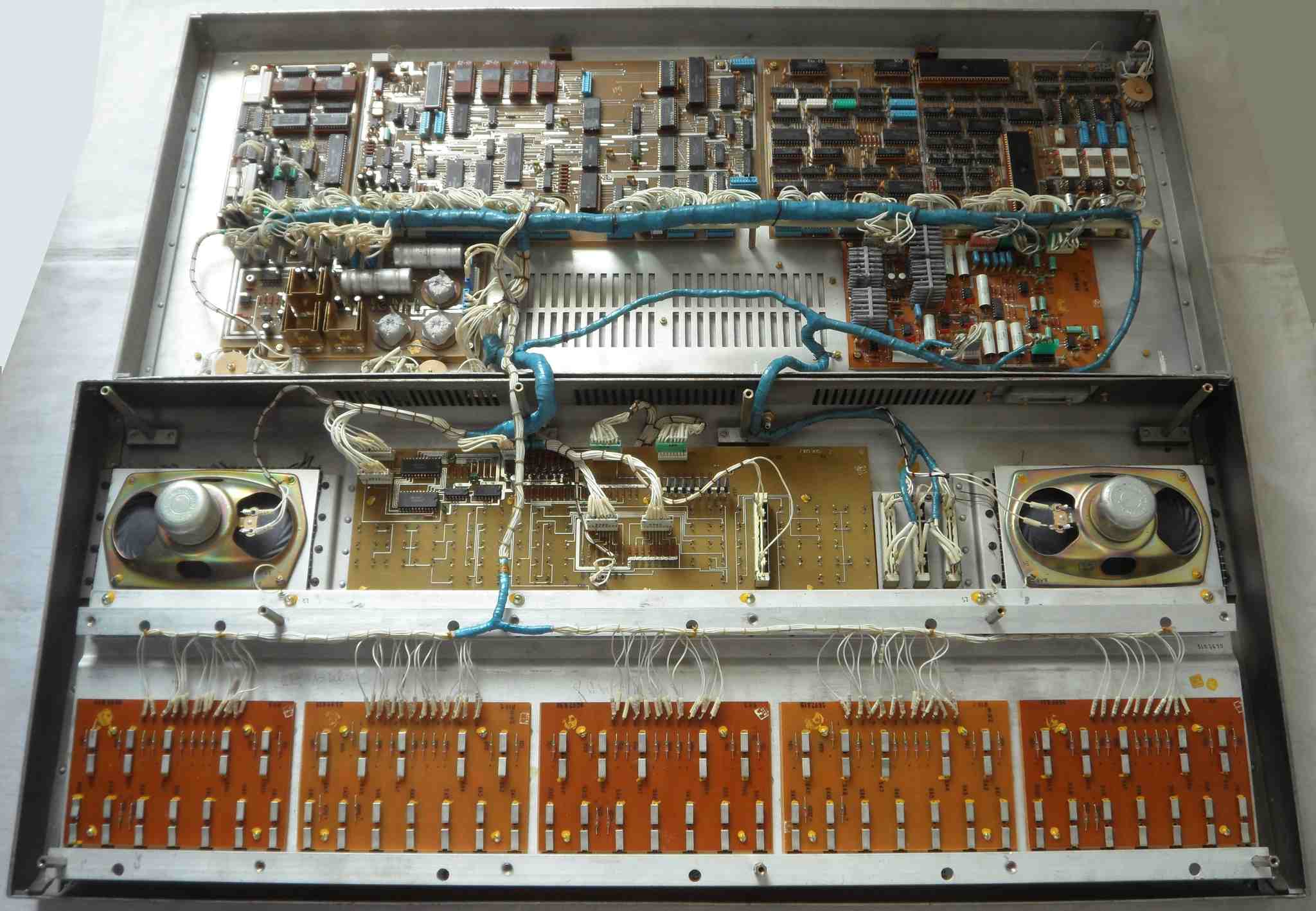
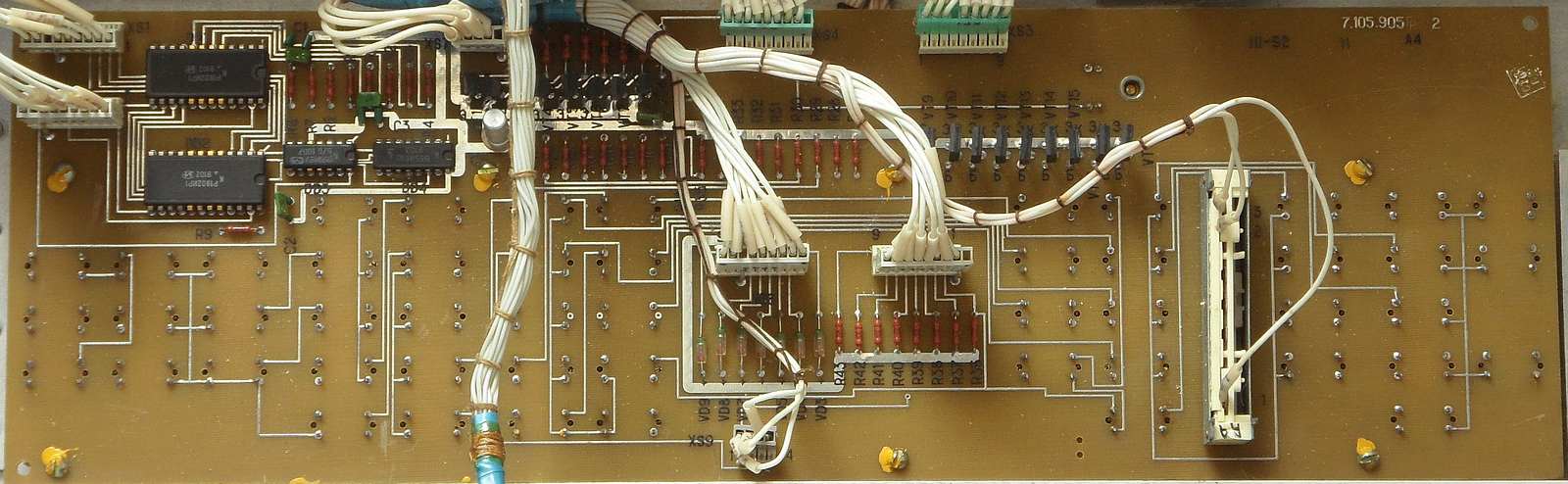
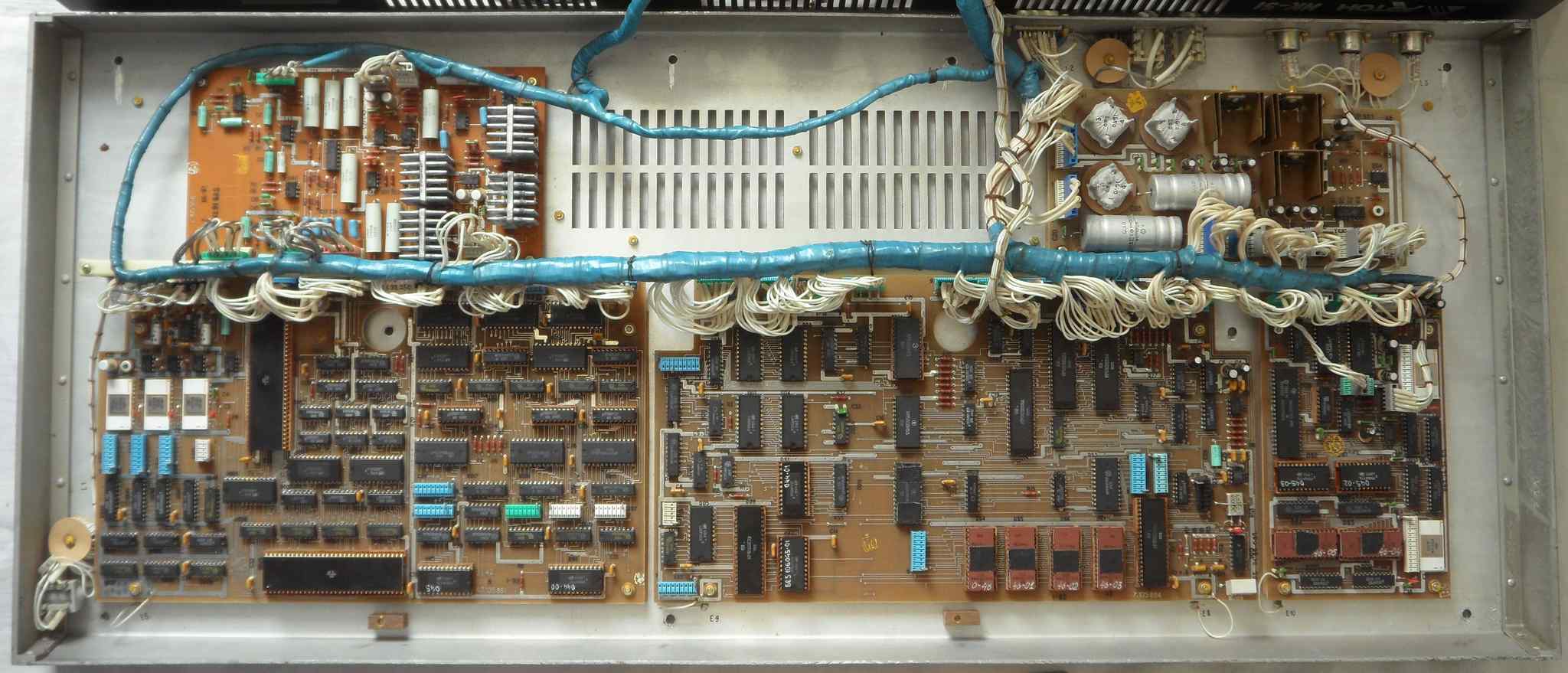
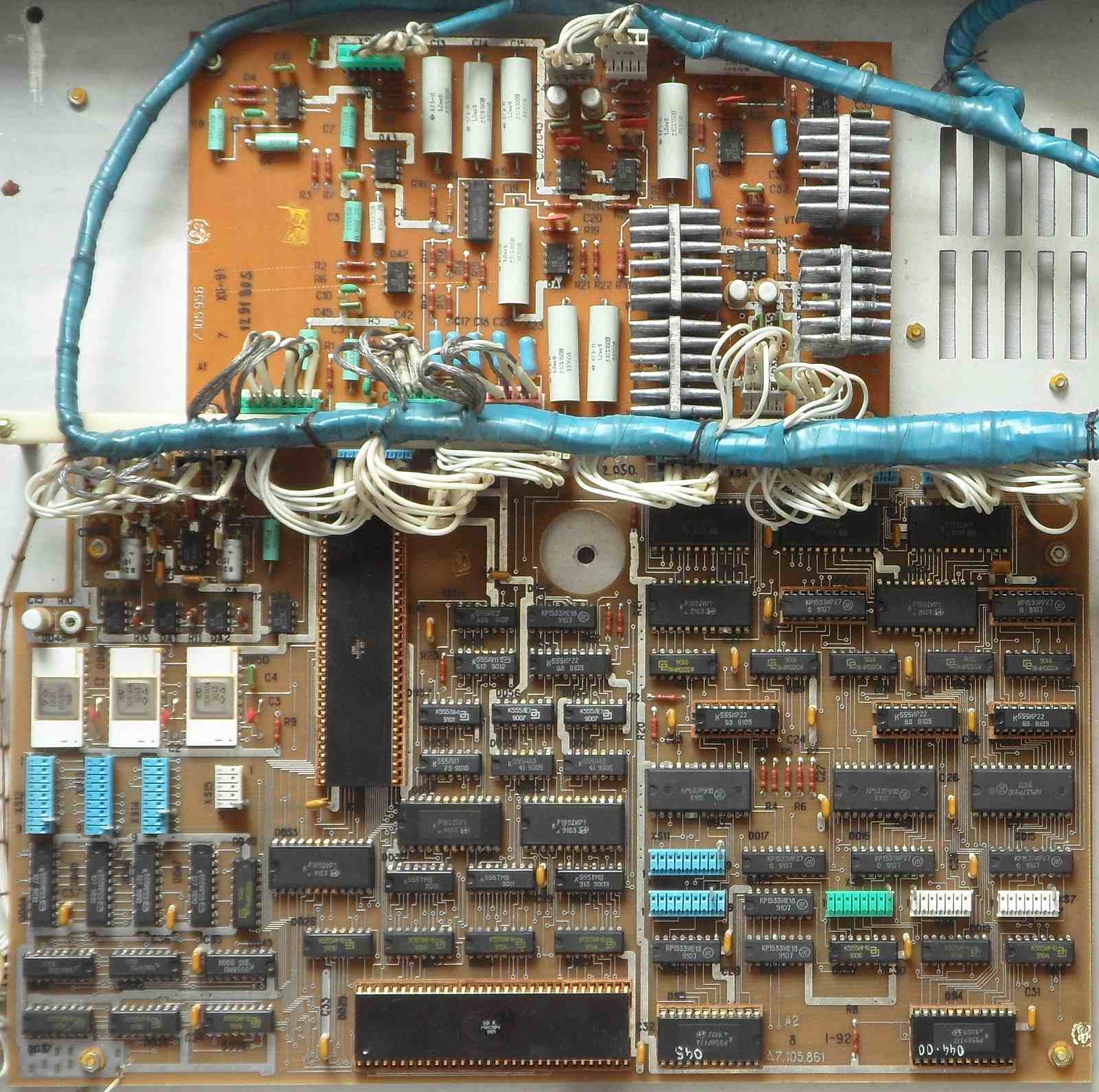
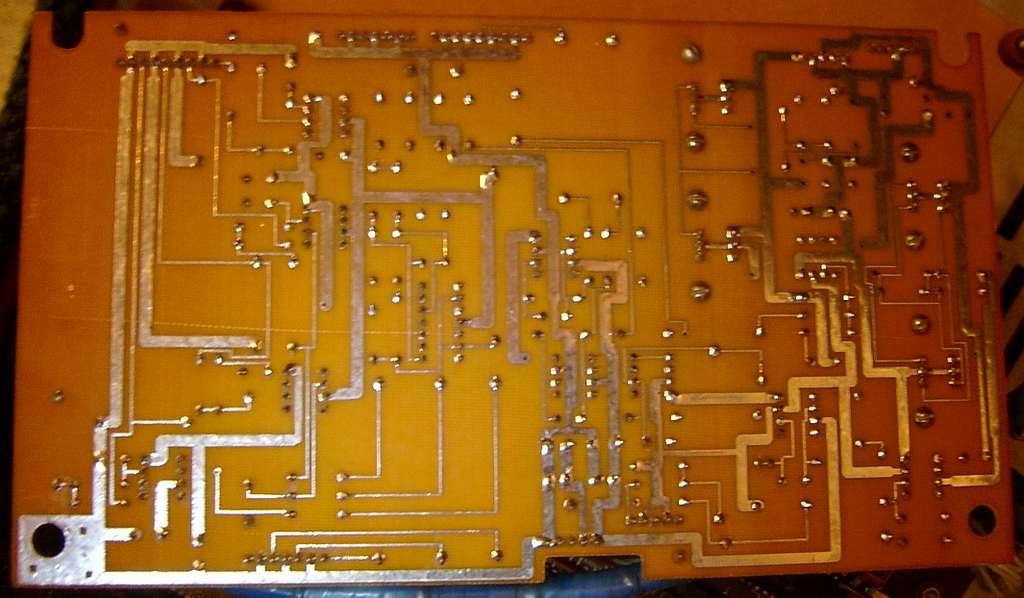
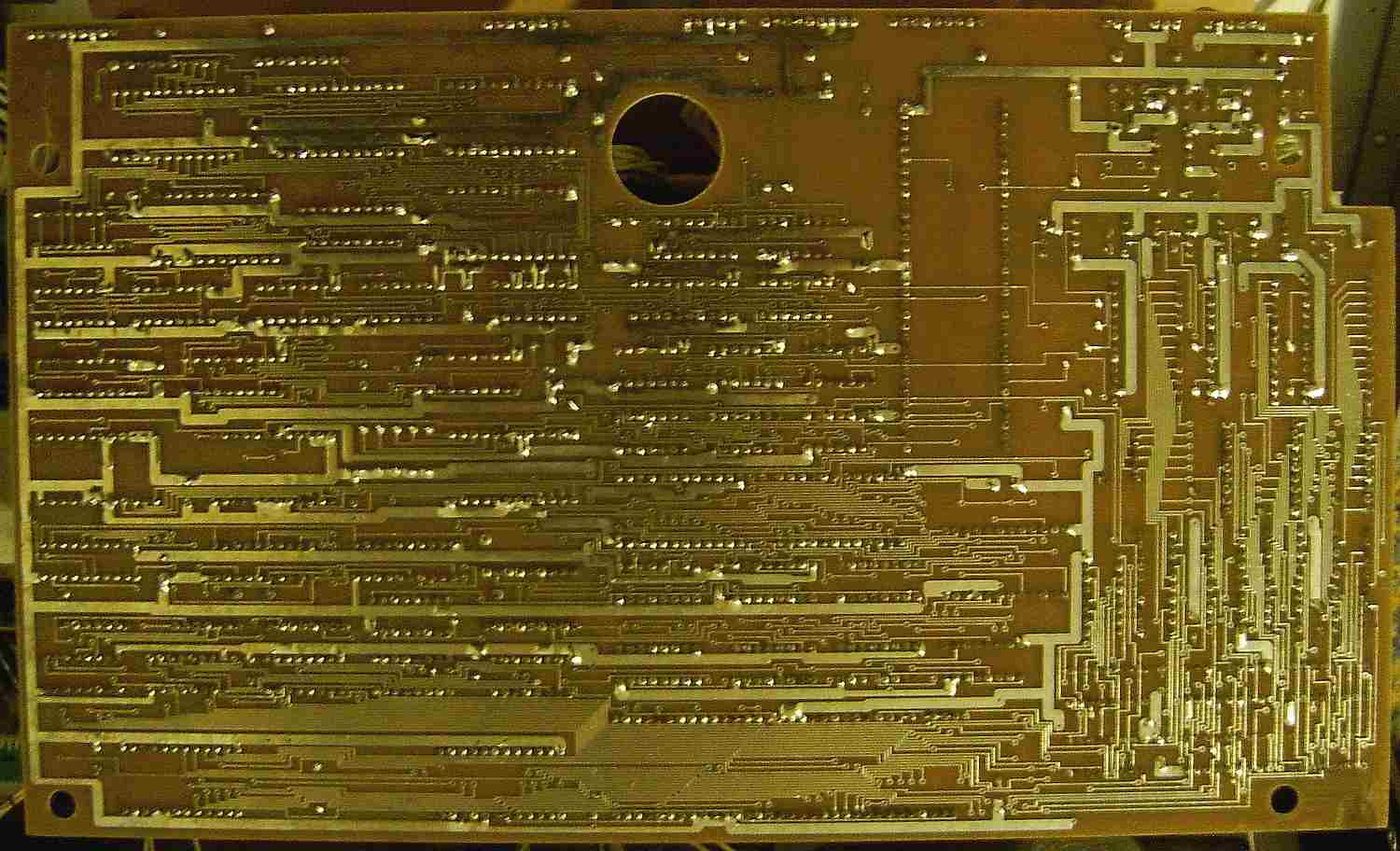
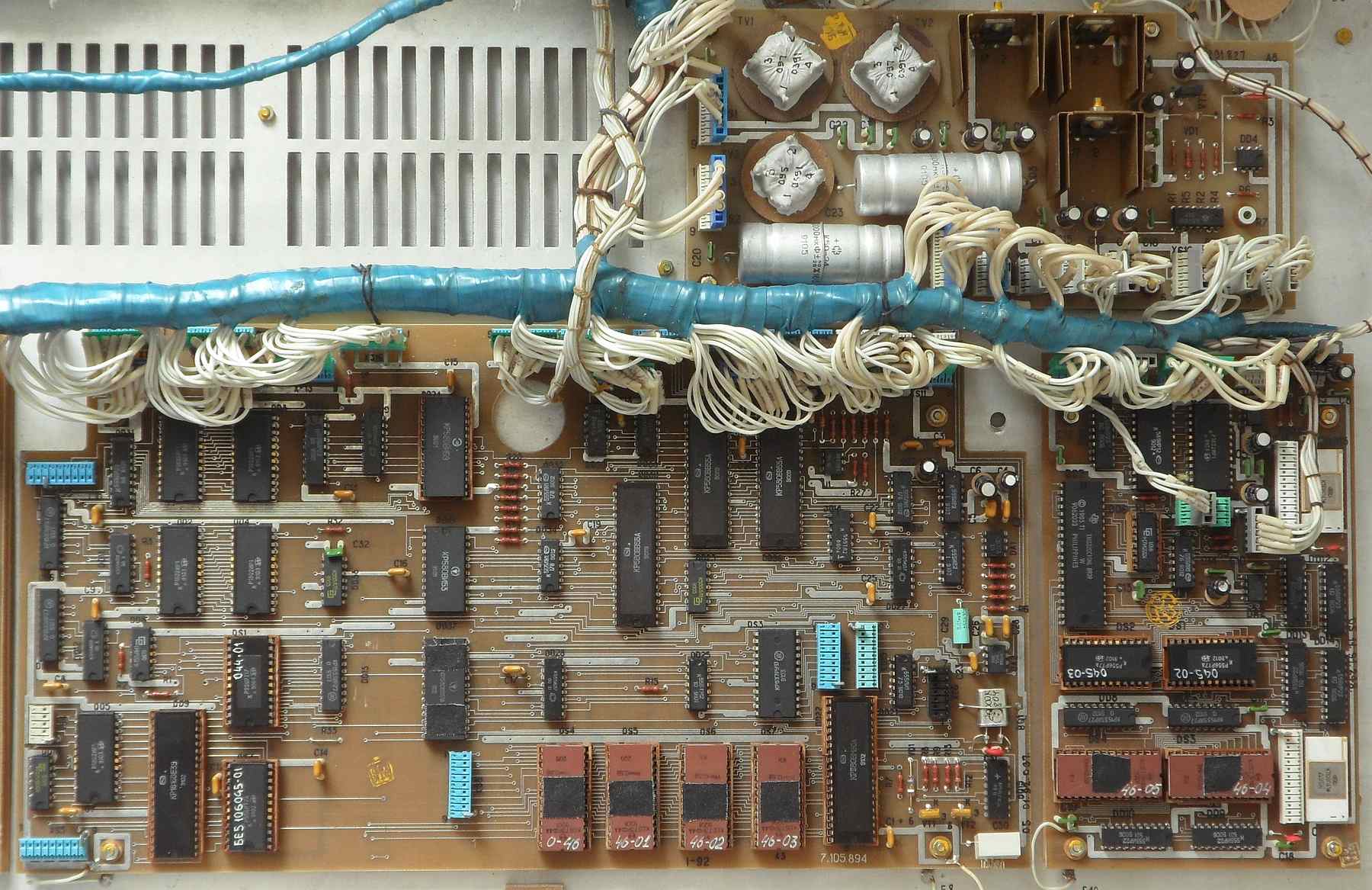
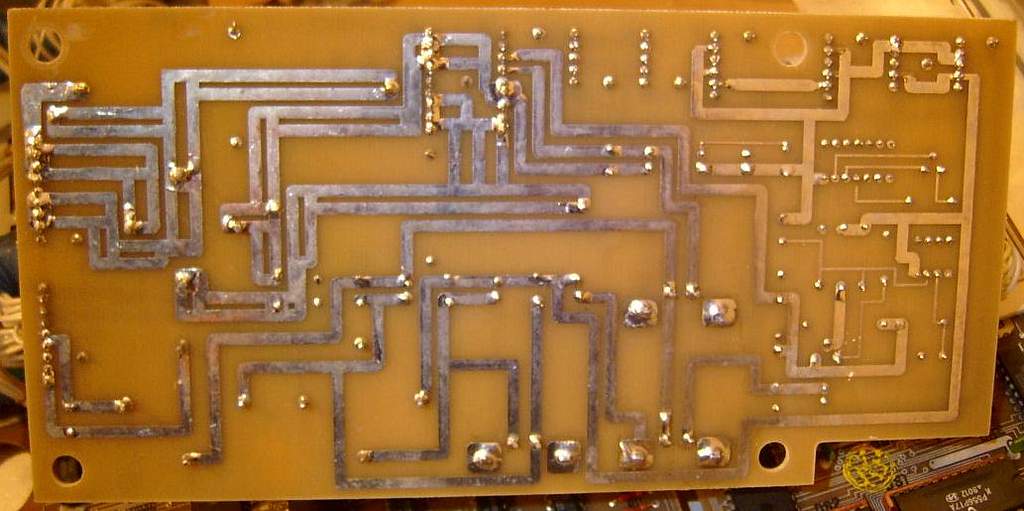
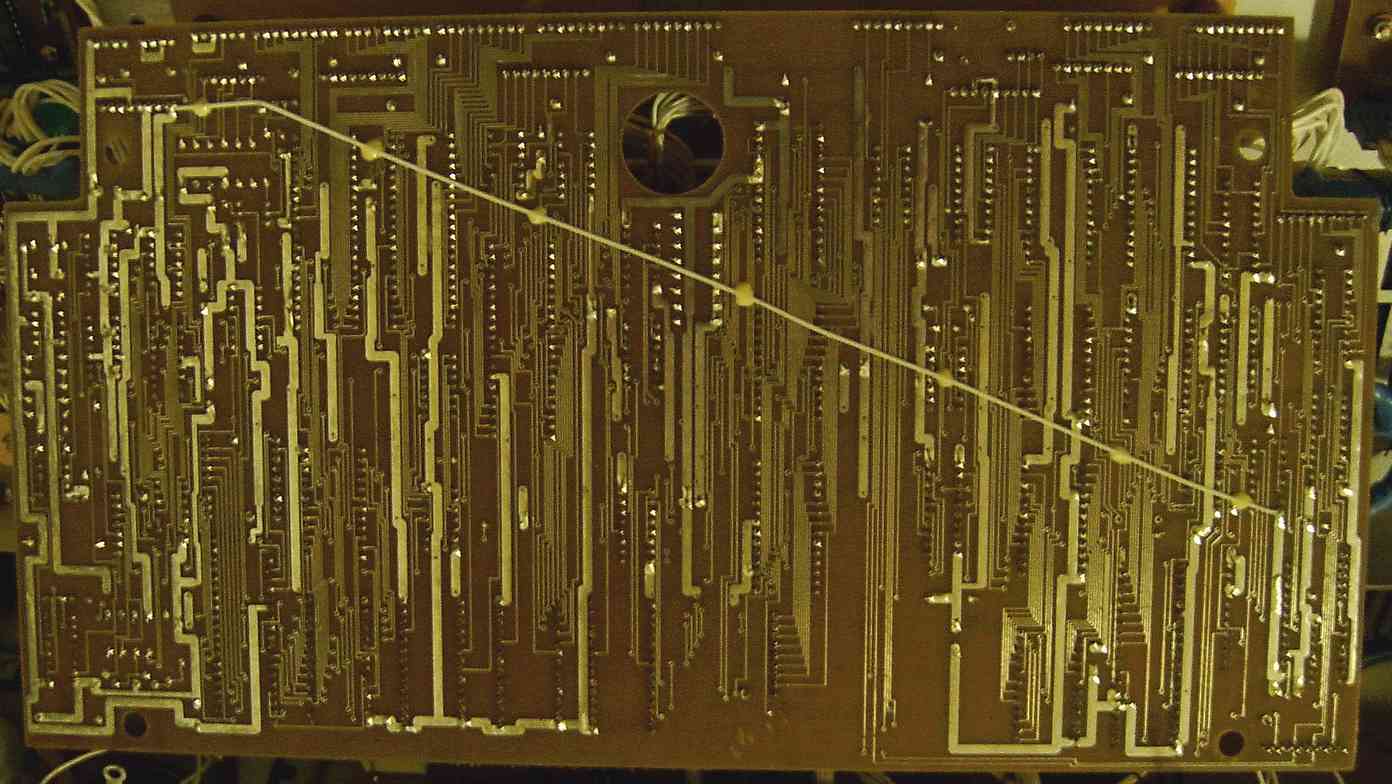
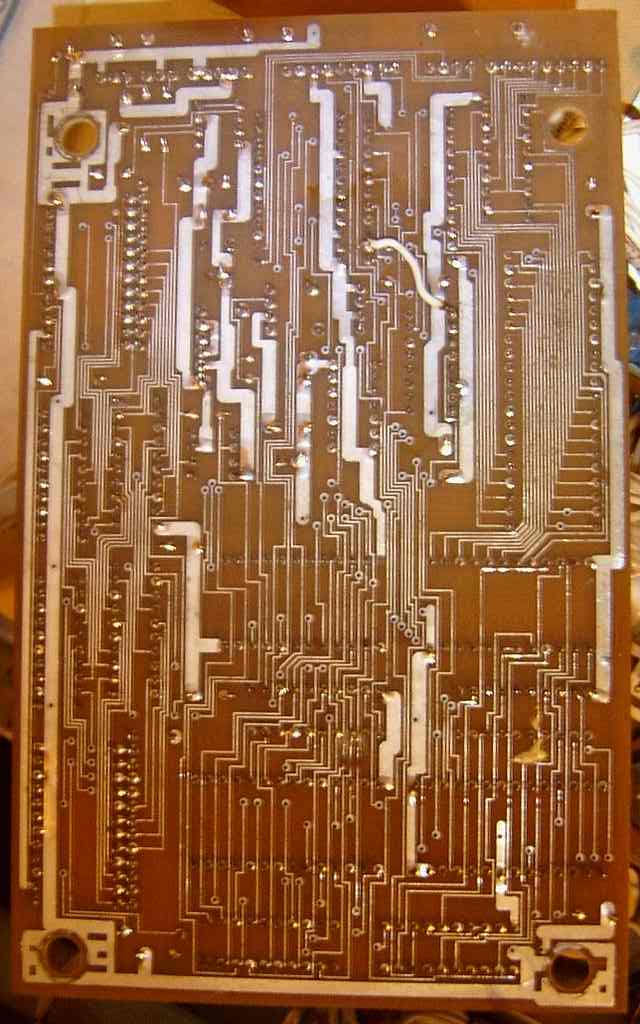
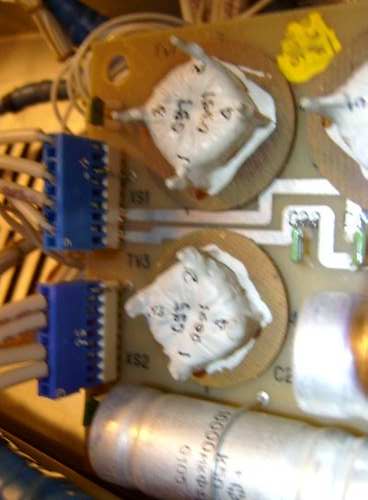
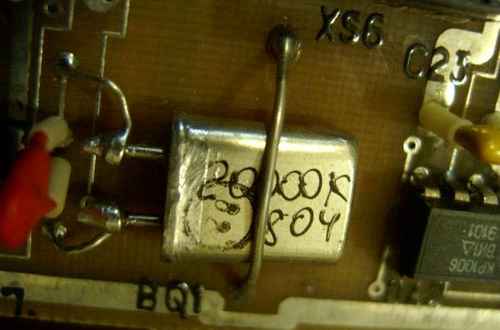
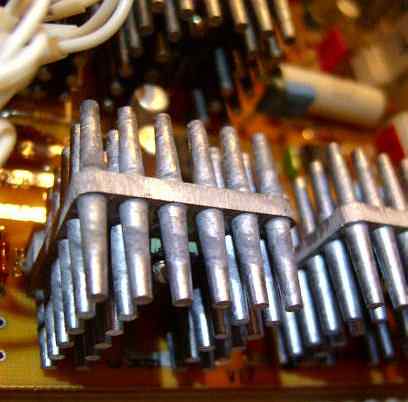
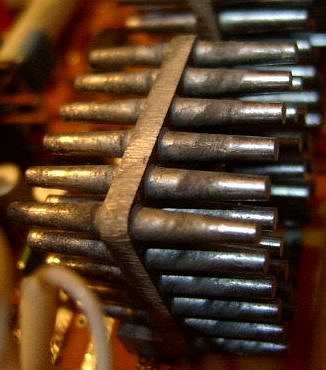
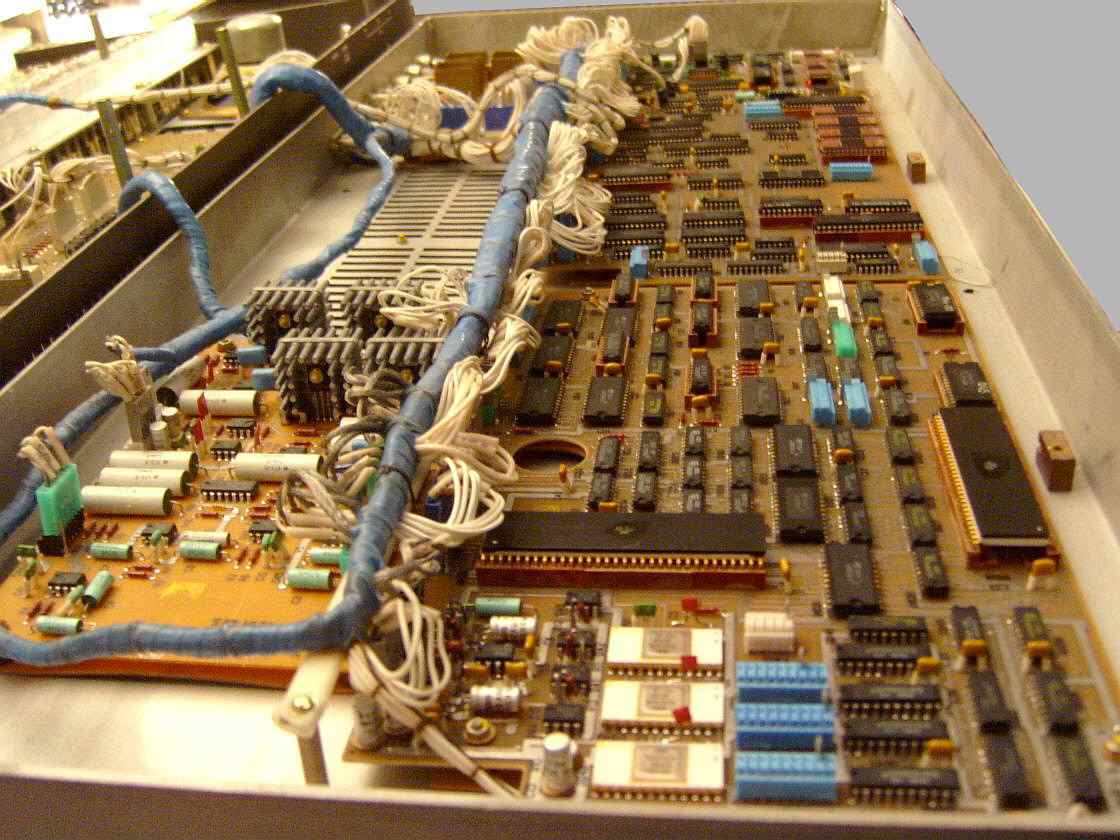
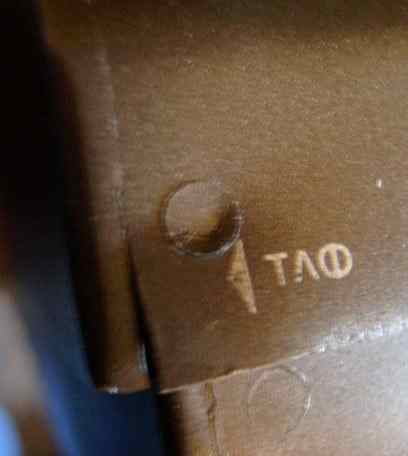
hardware detailsTheArton IK-51 has a heavy aluminium case that contains beside some analogue stuff 3 digital PCBs, each in the size of a big PC mainboard full of DIL ICs (many with ceramic packages or gold plated pins) looking like very early 1980th technology. The main CPU is the Soviet Intel 8080 clone KP580BM80A with 34.5KB (E)PROM + 2KB SRAM that controls the FM sound PCB, the sample percussion PCB and the display. Additionally there is a romless 8-bit microcontroller (MCS-48 clone) KP1816BE39. The FM sound PCB contains 2.5KB PROM + 6KB SRAM, 2x 12-bit parallel multipliers M1802BP4 and 3x 12-bit DACs. The sample percussion PCB has a genuine "Texas Instruments TMS320C10NL" CPU with 18KB (E)PROM and 2x 12-bit DACs. Additionally there are lots of dual port RAMs cluttered everywhere (each only 16 x 4 bits, in total 128 bytes), those likely buffer bus signals and so don't count as system memory. Also the panel PCB has 2 dual-port RAMs and a row of big transistors, those may be drivers for the 8 digit 7-segment LED display. Because it is very complex, more IC details see below. Handcrafting this today in small series would surely cost at least 5000€.According to Polivoks case date formula (MMYYnnn), the serial number "0792028" of my IK-51 would mean it was made in July 1992 as specimen(?) number 028. I don't know how many still exist. I read they weren't reliable. Thus when they failed after fall of the Iron Curtain, they likely easily ended soon as scrap metal long before anybody rated them collectable. The instrument's creator Vladimir Kuzmin mentioned that it contained e.g. a 580-series high-speed 1816 microcomputer and American TMS32010 (originally 2 of each to increase performance?). They wanted to make a plastic case, but the factory mold broke, hence they made it of aluminium. The complicated modular hardware was also a development platform for testing new synthesis algorithms. The bulky metal case looks oversized even for whats inside; which undoubtly helps to distribute heat, but may be also result of the pilot production, so it could fit additional daughterboards for all kinds of prototype modifications. They planned to later design higher integrated custom ICs made in Vilnius. This boatanchor looks like the bowels of an UFO to me. This is the diametrical opposite of the Golden Camel-7A, but as mysterious and bizarre, and I have no clue how it works in detail.
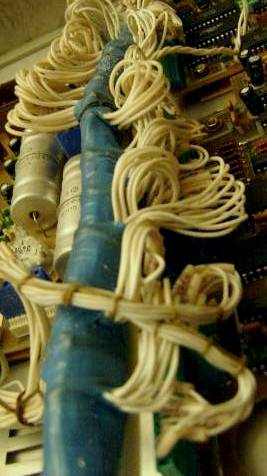
warning: If you ever get your hands on this elusive hardware, never unplug cables without marking plug orientation and where each of them belongs (particularly regard the right PCB). Messing up this spaghetti monster may easily end in a disaster. I identified the main ICs. I haven't listed unsocketed smaller ones those are likely logic ICs (e.g. 555=74LS). The ICs are Russian, hence some characters are cyrillic those I can't type here, so I use similar western letters. (E.g. the "N" ist reversed and means "I".) Prefix letters before the number need to be skipped to websearch them. Superisingly much of the stuff is Intel 8-bit compatible. The 2 biggest ICs are not MC68000 but 12-bit parallel multipliers, those likely compute FM and envelopes. I guess the lots of tiny dual-port RAMs buffer bus signals for demux, while the system memory is SRAM. Thus the main RAM is only 2KB on the mainboard, but 6KB on the FM sound board, possibly to hold all waveforms for avoiding slower EPROM access. The microcontroller KP1816BE39 is claimed to be (fortunately) romless and code compatible with Intel MCS-48, so it may be an i8039 clone (that would have 128 byte internal RAM). panel PCB
eproms Due to the missing EPROM stickers I assume that daylight exposure during production of the instrument weakened the bits in a way that it prematurely lost its data. But also the PROMs (not EPROMs) run quite hot, which may have damaged them. Nevertheless I dumped them with my Willem eprommer, using handmade adapters. They have the following handwritten marks (from left to right): EPROMs: DS4="0-46"
PROMs: DS5 ="045"
The PROM "045" seems to run somewhat hotter than the others, which may
indicate a fault.
|
At its time it was socialism, whose scientists desperately tried so hard to understand and replicate the inner working of advanced western technology, to build this keyboard that remained economically fruitless. In near future it may become humankind in whole, who will struggle as heavily to understand and recreate inventions made by AI, or finally give up to compete with a superior dominant species if we allow superintelligence to take over.
The only mostly intact function of my IK-51 is the demo song "Badinerie"
by Bach. The sound has strange digitallic honking overtones (resembling
telephone touch tones); also rhythms patterns may be broken, and pressing
"transpose" adds a siren-like howling grainy glitch voice. The whole rendition
inscrutably reminds to the song "Load" from the symphonic synth music record
"Microprocessor 8080A" of 1980 by Elmulab.
| Please help
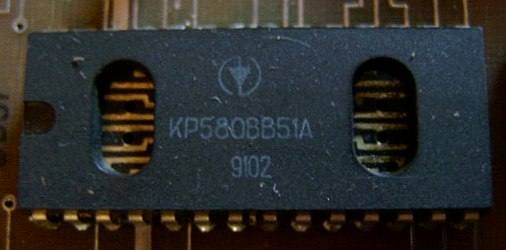
The Arton IK-51 is an incredible piece of finest Soviet engineer work, that does not deserve to end as scrap like so many other electronic relics those were considered outdated and soon replaced by cheap throwaway mass products. Please help to revive this artifact. It deserves emulation to be preserved in MAME. I need the intact ROM dump files and schematics. I suspect that at least the accompaniment eprom got eaten by bitrot. some questions: Why has the IC "KP580BB51A" 2 openings? Are they for cooling, or was the IC calibrated or programmed through them during production? Why are there many unused connectors and an unused jack outlet hole? Was it intended to be upgradeable or compatible with special Russian computers? Is the digital electronics based on any Russian or DDR (German Democratic Republic) standard computer hardware? Was there a programmable synthesizer upgrade planned? |
Apparently an IK-51 variant without percussion was Arton IK-50.
But this seems even much rarer (possibly an unfinished single demonstration
unit prototype); even through Yandex I found no signs of ownership and
not even an internet photo. The only other somewhat similar digital Soviet
Bloc keyboard (but with analogue percussion and no midi) was the Vermona
SK-86 made in German Democratic Republic. (I own one.)
| removal of these screws voids warranty... | ||
 |
 |
|
|
|