 |
 |
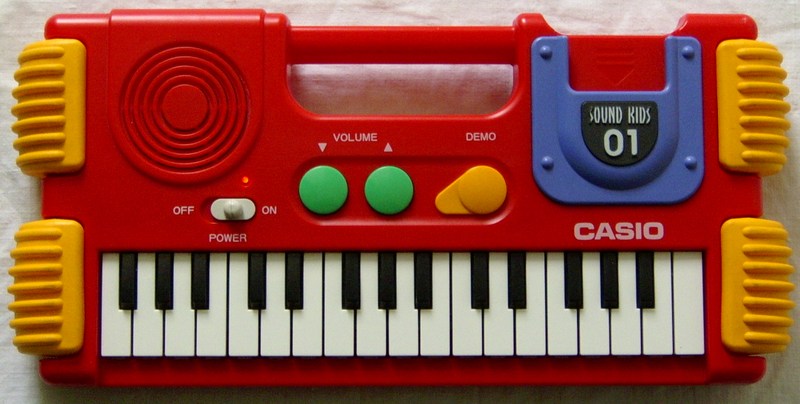
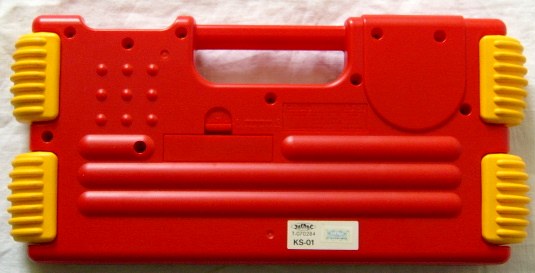
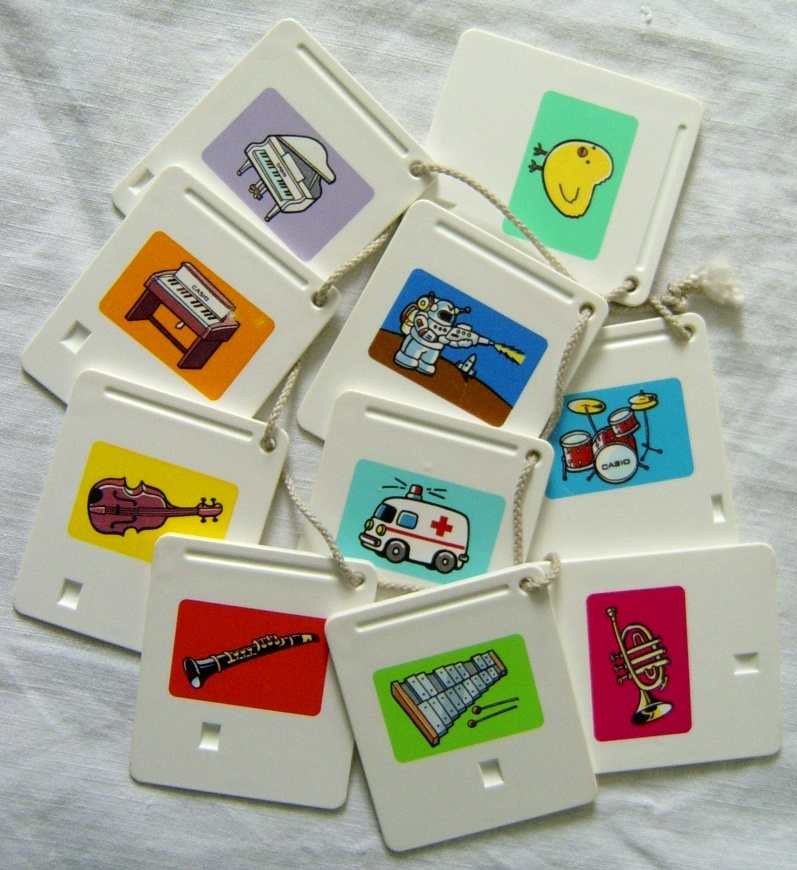
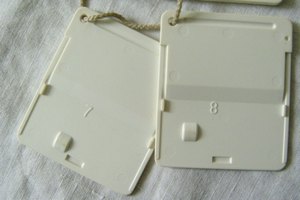
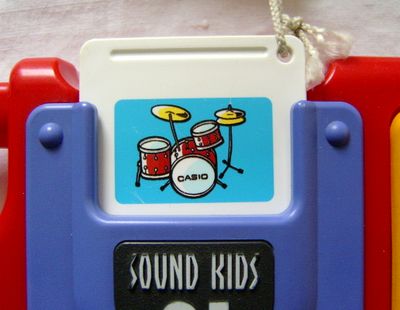
This rare toy keyboard of 1991 (embossed case date) was the likely most crippled Casio SA-series variant. It has no rhythms and only 10 preset sounds selected by plastic cards.
|
|
 |
 |
 |
 |
 |
 |
My KS-01 initially didn't work. It behaved like a stuck "volume up" button, but it turned out that there was a corrosion voltage of 150mV across its pins, because of acid or salt residues on the PCB. Battery contacts are not corroded, so possibly a child had spilled something inside. Washing the silicone contact strips with dishwashing detergent and cleaning the carbon contact area of the PCB with isopropanol fixed it.
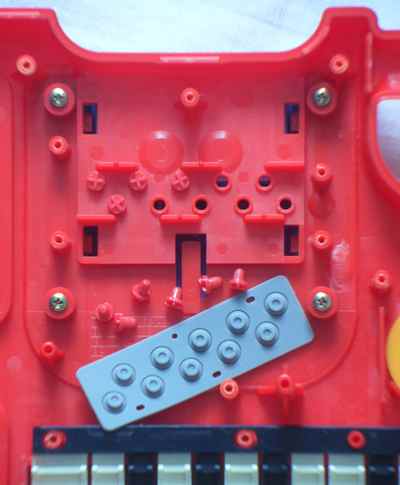
The 10 preset sounds correspond to Casio SA-1. Different are 'violin' (duller, = from SA-35?), 'trumpet' (duller, less chorus, = variant 3 of SA-35?). The "glockenspiel" card is 'bells'. The "ambulance" here has same siren but on the rightmost key an additional car horn. The 'chicken' (depicts a yellow chicken) is a short bird tweet with percussive attack (only 1 pitch, like highest 'pearl drop' note without echo or SA-35 'chirp' in higher). The 'drumkit' card plays 4 sounds {mid synth tom, snare, closed hihat, triangle}.
The demo is the Japanese children song "Aye-aye" (music by Seiichiro
Uda, lyrics by Yumi Aida) arranged as a long and nicely arranged comedy
tune in slapstick B/W movie style with honking notes and the full palette
of (on this keyboard unreachable) SA-series effect sounds. The melody is
also known as song 2 from the arcade game "Turtles" by Stern/Sega (1981,
aka Sega "Turpin", main theme of Konami version).
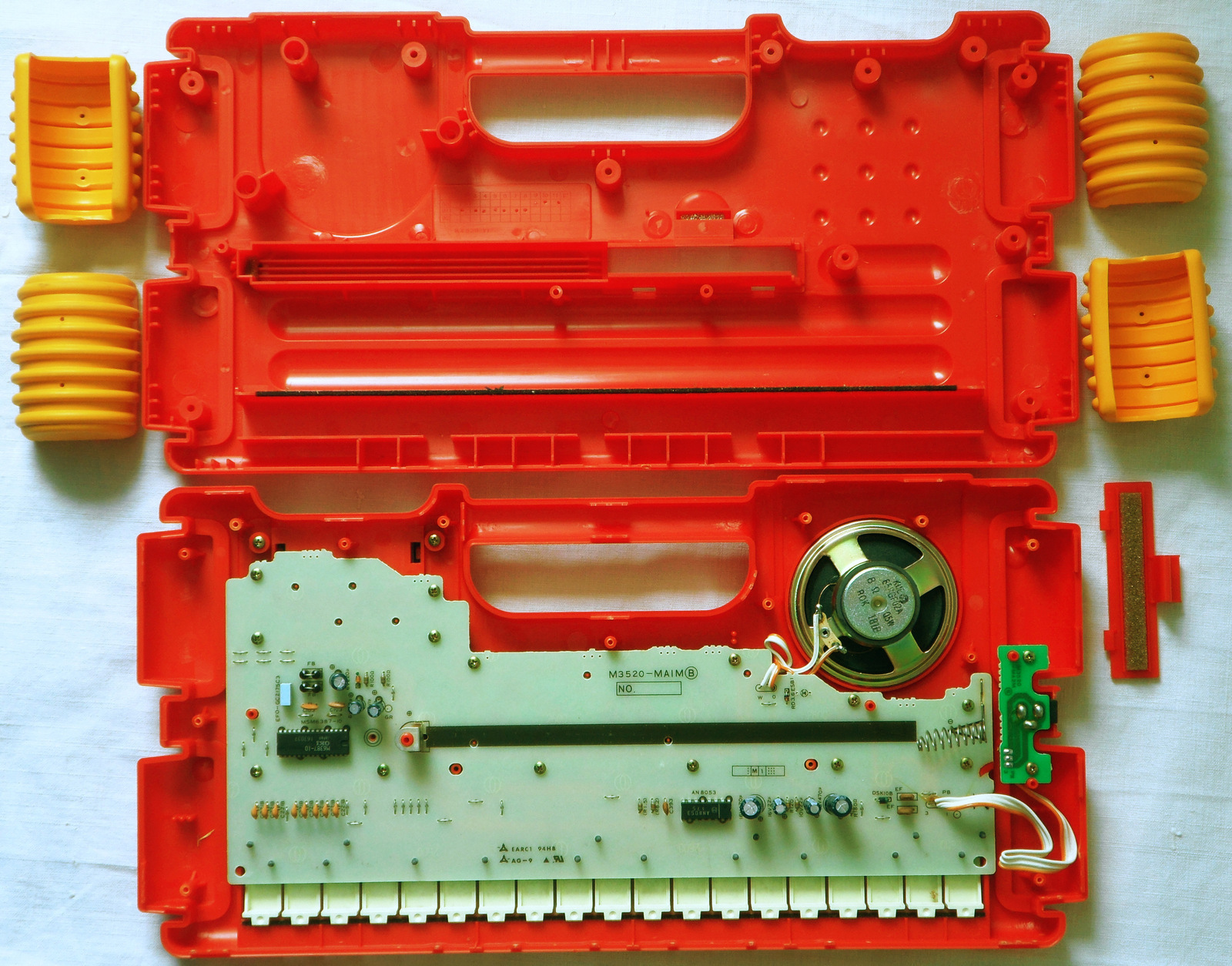
circuit bending detailsThe Casio SA-1 is built around the CPU "OKI M6387-10".
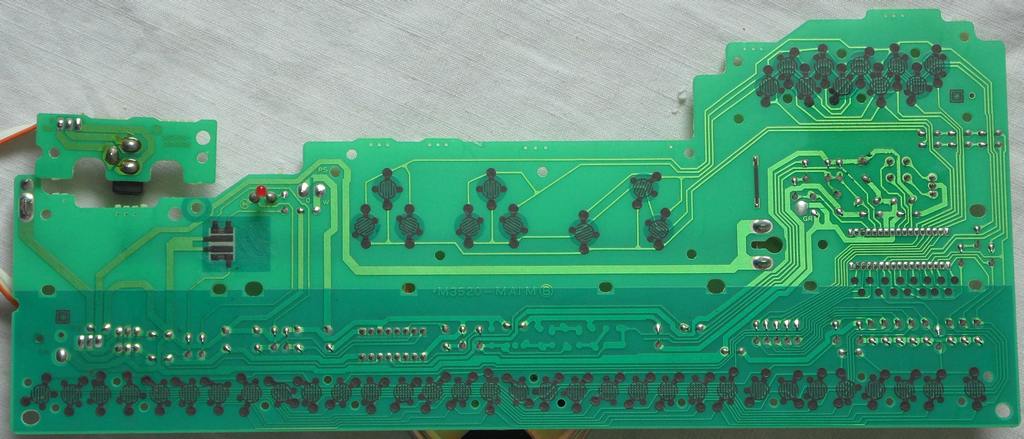
keyboard matrixThe matrix layout is obviously based on Casio SA-1, but with OBS preset sound contacts instead of cipher buttons. (Because all 10 are populated, I did not find irregularities like in KS-02.) Most interesting is the hidden rhythm set that resembles SA-1 but is full of glitches.
The input lines are active-high, i.e. react on +Vs. Any functions can
be triggered by a non- locking switch in series to a diode from one "out"
to one "in" pin.
eastereggs: Like in SA-1, wiring a button at KO4->KI7 selects 32 rhythm patterns through keyboard keys. Also tempo +/- (KO4->KI5, KO5->KI6) and stop button (KO5->KI5) are there. But although the rhythm set resembles SA-1, it obviously differs and is full of glitches. So some patterns run unbalanced by containing a pause before they repeat. Others honk on a tekkno-like staccato tone, which may result of a changed internal preset sound order that replaced a drum or hihat with a melodic instrument. But even recognizable patterns are often on different keys than in SA-1. Likely some were redesigned to act as fill-ins for its long and complex demo song of KS-01that uses literally all bells and whistles and so may have reached numerical limits of the internal sequencer or rom size and so misused rhythm patterns as subroutines. Also here a diode at KO-7->KI7 (sensed during power-on) enables 4-note polyphony, which makes note mess by lack of individual key matrix diodes. |
A bigger Sound Kids keyboard with ROM-Pack slot was Casio
KS-02.
| removal of these screws voids warranty... | ||
 |
 |
|
|
|