 |
 |
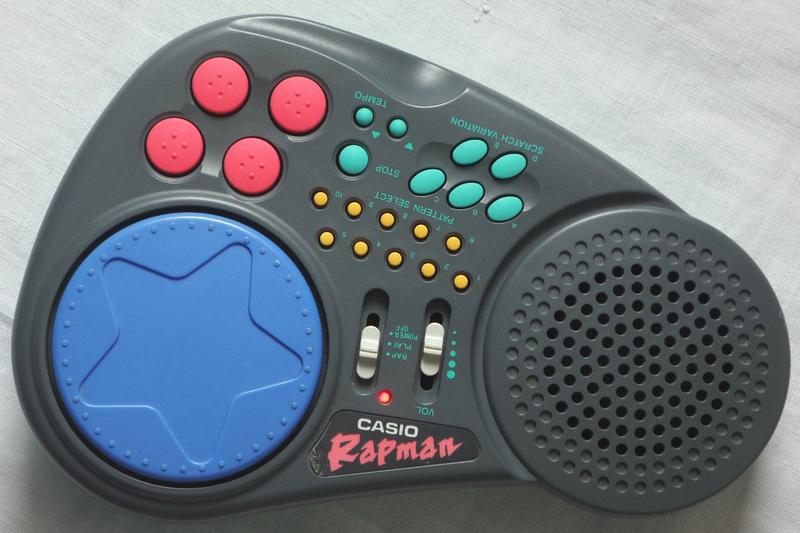
Wow, a grovebox-wearable with voice effects? How exciting is this?! Unfortunately nope. This soundtoy of 1992 was the most boring thing of Casio's Rapman series. It has no voice changer, but only 10 preset hiphop rhythm patterns and a fake scratch disc.
|
|
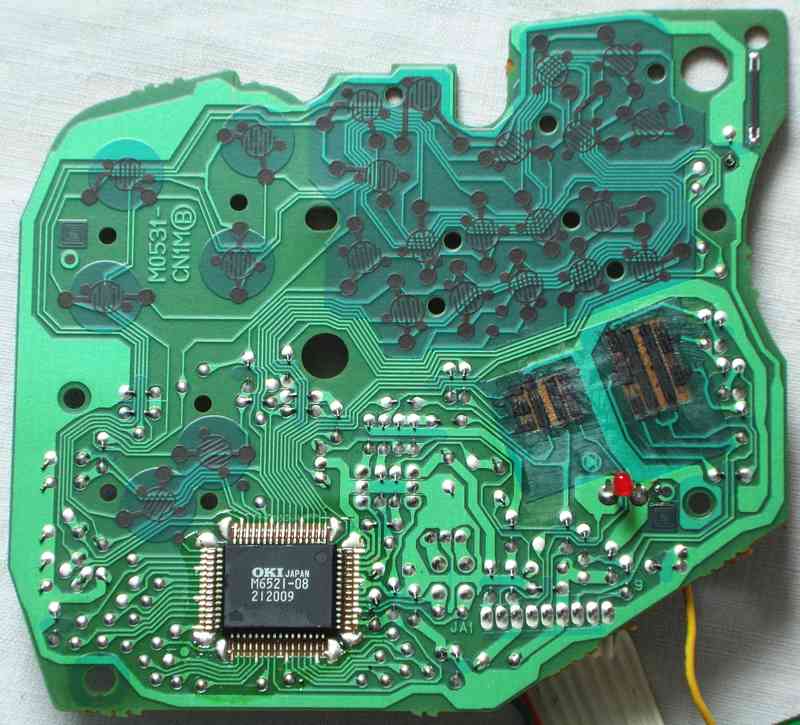
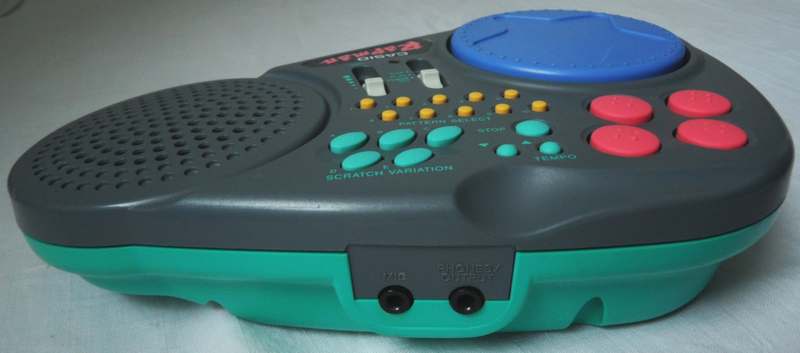
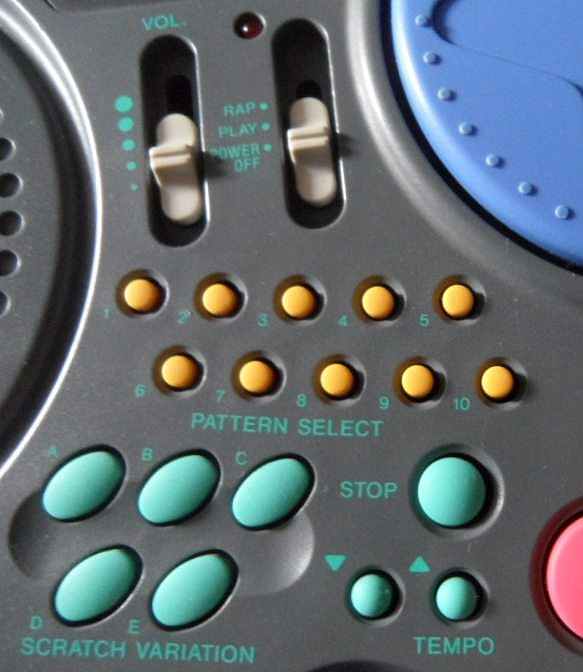
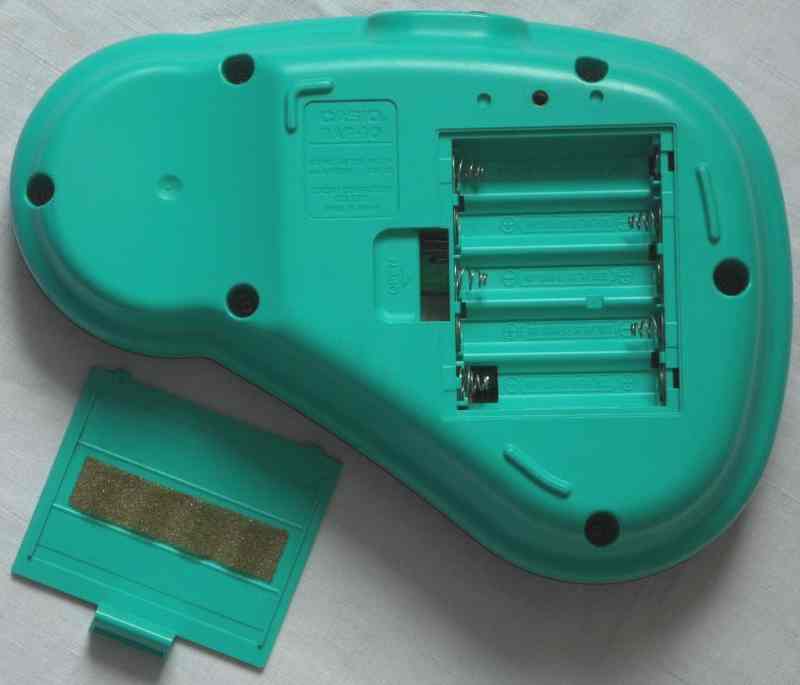
built-in speaker 10 OBS preset rap rhythm patterns (some with fixed key accompaniment) tempo +/- buttons (26 steps) volume slide switch (5 steps) 4 drumpad buttons {base, snare, "clap your hands!", orchestra hit} fake scratch disc (simulates 2 button presses) 5 OBS scratch variations {scratch hi+lo, "hit it!"+"clap your hands!", ping+orchestra hit, vocoder hi+lo, heavy metal guitar hi+lo} CPU= "OKI M6521-08, 212009, Japan" (60 pin SMD) jacks for phones, microphone
 |
 |
 |
12(?) preset rhythms select button addable. different scratch variation addable (likely multiple, very glitchy).
Interesting is that in some rap patterns the drumpads (but not scratch disc) mute the drums for 1 bar. The "clap your hands!" drumpad and the scratch disc are duration sensitive and truncate their sound when released.
The user interface has strange quirks. So the rap patterns only work
with power switch in "rap" mode, which disables the scratch disc (sounds
only a click) while no pattern is playing. Despite the patterns are on
individual OBS buttons, you need to press "stop" before you can select
another, because like in RAP-1 the CPU misuses parts of the PT-88 "auto
play" algorithm to implement the rap mode.
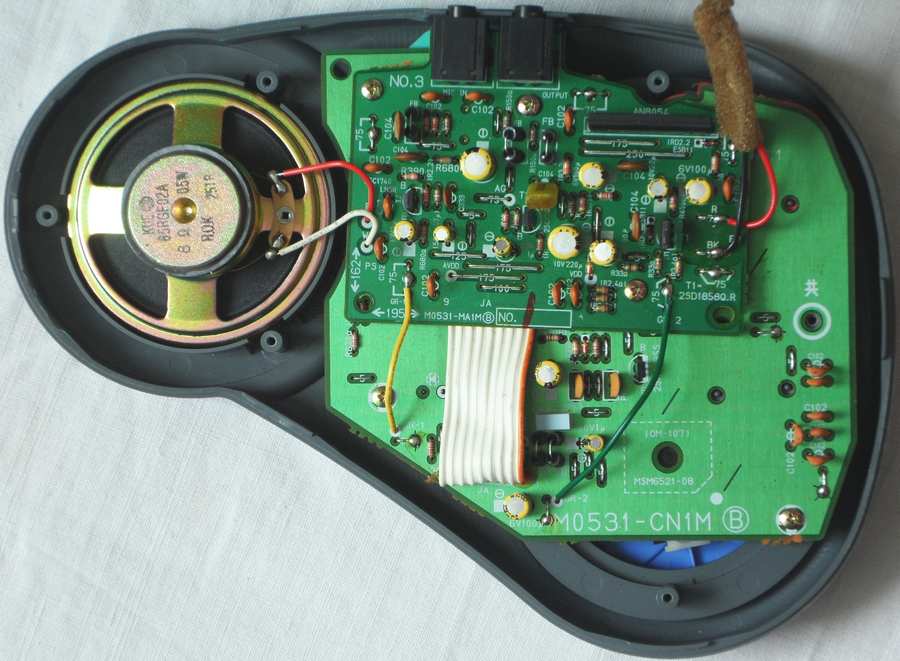
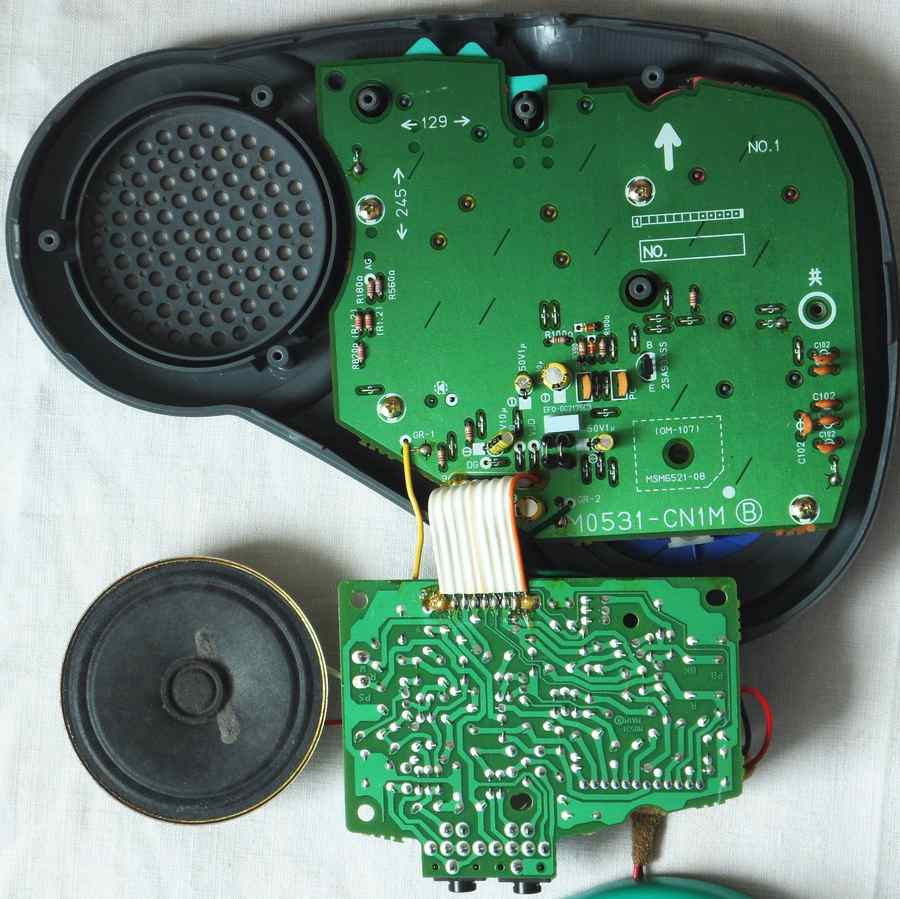
circuit bending detailsThe Casio RAP-10 is based on the CPU "OKI M6521-08". There is no voice changer. Like other Rapman variants it is derived from PT-88 hardware, but here the software got particularly badly mutilated.
keyboard matrixThe RAP-10 is derived from Casio PT-88 hardware in a very hacky way, which causes many quirks. The 10 yellow buttons are technically keyboard keys, but their mainvoice sound was removed to stay mute in "play" mode. Up to 12 preset rhythms, a drumpad and more scratch variations (very buggy) can be added.This matrix was analyzed by myself with the help of service manuals
of Casio ML-2, ML-3, ML-1.
The input lines are active- high, i.e. react on +Vs, thus any functions
are triggered by a switch in series to a diode from one "out" to one "in"
pin.
Compared to other PT-88 variants the tempo +/- buttons in RAP-10 are swapped. It is unknown if this should simplify the PCB layout of the mostly diodeless matrix or resulted of a programming bug. Also here there is activity on the LED matrix pins. eastereggs Like in Rapman RAP-1, also here the broken "melody guide" and "any key" modes exist. And even connecting the (here absent) polyphony diode at KO7->KI7 does a subtle change, namely that drumpads keep working with both scratch disc contacts closed, which normally stays mute.
Up to 12 additional rap rhythms can be added by connecting a rhythm select button at KO6->KI6. Unlike the normal ones, these rhythms contain no accompaniment. The select mechanism from PT-88 would use the 12 leftmost white keys, but only 7 of them correspond to scratch disc directions and cipher buttons of RAP-10. So for the rest 5 buttons need to be wired in row KO1 and KO2. (I have marked them in the keyboard matrix from theory, but haven't tested if they are correct. Unused keys are omitted although the full upper 4 matrix rows exist.)
3 additional drum-/effect pads (KO4->KI4..KI6) and variation button (KO6->KI5) can be added. But new are only the vocoder sounds (those already exist in scratch variations). The sounds on drumpad places (normal | variation) are: KI0: "clap yo hands!" | rimshot
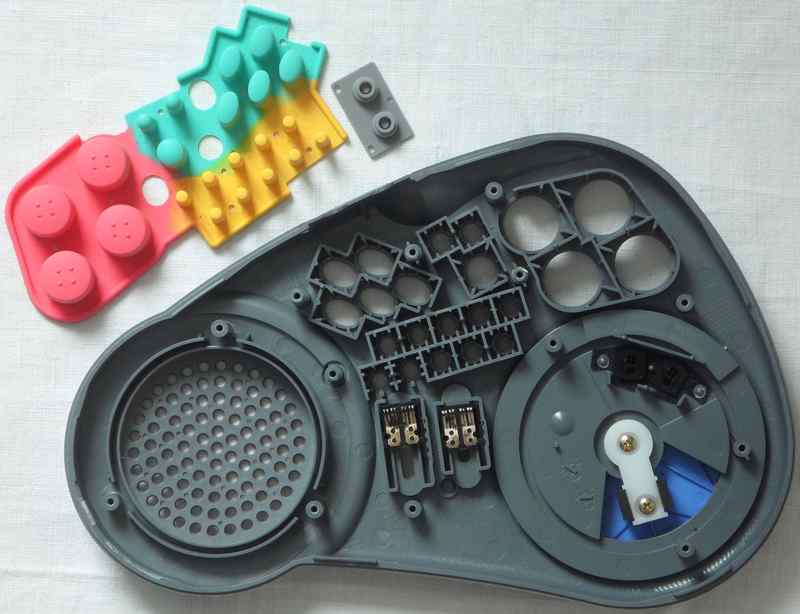
Unlike the normal Rapman (see here), the scratch disc of RAP-10 is not implemented as 2 drumpads but wired to matrix places of the 2 leftmost keyboard keys, and the scratch variation buttons correspond to cipher buttons for selecting main voice preset sounds. There are 5 unused matrix places in row KO5 and KO6, but only a button at KO5-KI2 selects something (low orchestra hit | distorded snare?), and using this button again stays mute. The other 4 are mute and tend to mute the disc entirely, but combinations may do more interesting things. (I didn't examine this further.) Knowing the Casio KS-02 OBS buttons behaviour (see here), this hints how insanely crude the scratch variations are implemented.
|
DJ soundtoys with poorly working scratch disc are a strange species.
An intriguing example of their summit was the Potex
Ultra-Mixer.
| removal of these screws voids warranty... | ||
 |
 |
|
|
|